

If you keep asking why does my dog smell after a bath, and the smell comes back within a day, look first at what your dog lay down on next. Bedding, blankets, collars, harnesses and couch covers hold hair, skin debris and old odor, and a clean coat can pick that smell right back up.
Your dog smells wonderful for about four hours. Then comes the usual corner of the couch, and by breakfast the whole animal smells faintly of it. We have written plenty about what causes odor on the dog itself, so this piece leaves the body alone and goes after the other half of the problem: the stuff your dog wears, sleeps on and rubs against.
Why Does My Dog Smell After a Bath? Check What Touched the Clean Coat
A bath resets the dog. It does nothing for the bed.
What "transfer odor" means
Transfer odor is our plain-English name for smell that a clean dog picks up from fabric, foam or webbing after a bath. It is different from odor that starts on the dog's skin. If the dog smells mostly on the flank, shoulder or neck, in the exact spots that press against the bed or sit under the collar, fabric is a reasonable first suspect.
Run a one-bath experiment
- Wash the textiles first. Launder the bed cover, blankets and couch throw before bath day, or during the bath if your machine can keep pace.
- Clean the gear. Wash or wipe the collar and harness, and let them dry fully.
- Bathe and dry the dog. A coat that goes to bed damp muddies the test, so follow our complete drying guide.
- Sniff at 24 and 48 hours. If the dog stays fresher than usual, the environment was a big part of it. If the smell returns just as fast, stop doing laundry and call your veterinarian.
Where the Smell Actually Lives
A dog may have one official bed and four unofficial ones.
Beds and foam
The bed is the obvious culprit because it gets the most hours. Veterinary dermatologists quoted by PetMD describe skin cells and moisture collecting on foam under the fabric cover, which is also where house dust mites can settle. A clean cover over a neglected insert will only get you so far.
Blankets, throws and couch covers
These are the sneaky ones. They rarely get counted as dog bedding, so they rarely get washed on a dog schedule.
Collars and harnesses
A collar sits against the neck around the clock, through walks, rain and dinner. If you bathe the dog and buckle the old collar back on, you have put yesterday right back on the neck.
A Laundering Frequency Chart for Dog Fabrics
The American Kennel Club says there are "no hard and fast rules" for how often to wash dog bedding, while pointing to public health guidance that leans weekly. A veterinarian quoted in PetMD's washing guide suggests weekly, or every two weeks at minimum. The intervals below are practical starting points of our own, built around that range. They are not a clinical standard.
| Item | Starting interval | Move it up if |
|---|---|---|
| Removable bed cover | Weekly to every 2 weeks | Heavy shedding, drool, muddy paws |
| Blankets and throws the dog uses | Weekly | The dog sleeps on them every night |
| Couch or chair slipcover | Every 2 weeks | It is the dog's main napping spot |
| Crate pad or car seat cover | Every 2 weeks | Beach, hiking or rainy-week trips |
| Washable bed insert | Every 2 to 4 weeks | The cover has leaked or the bed smells |
| Nylon collar, harness, leash | Every 2 to 4 weeks | After swims, mud or heavy rain |
| Leather collar or leash | Wipe clean monthly | It gets wet or dirty |
How to adjust the schedule
Treat the chart as a dial. A short-coated indoor dog in a dry apartment can usually stretch toward the longer end. A double-coated, drooly, puddle-seeking dog will push you to the shorter one, and regular brushing keeps some of that loose hair out of the wash. Fall and winter can change the math too, as we cover in why dogs can smell stronger in fall.
If someone at home has allergies
Lean toward the weekly end. PetMD's dermatology sources recommend washing bed covers each week for dogs allergic to dust mites, and one suggests replacing the bed at least once a year. If you suspect an allergy in your dog or a family member, get medical advice first.
Care by Material: Follow the Label, Then Dry Completely
The care tag outranks anything on this page, including temperature. Use the warmest setting the label allows if you want the most from the wash, but do not assume a setting has sanitized anything. A 2021 review in Applied and Environmental Microbiology names temperature as the leading factor for controlling pathogens in laundry. That research concerns human clothing and household wash conditions, so read it as useful background for dog fabrics.
| Material | Wash | Dry | Watch for |
|---|---|---|---|
| Cotton covers and towels | Machine, per label | Until dry through the seams | Holds moisture longer than you expect |
| Polyester, fleece, microfiber | Machine, per label | Per label, often low heat | Odors can cling harder than on cotton |
| Fiber-filled beds | Machine if it fits and the label allows | Air dry until fully dry inside | Filling can clump in a dryer |
| Foam inserts | Follow maker's directions; many are spot-clean only | Air dry completely | Dampness trapped in the core |
| Nylon webbing | Hand wash in mild soap, or in a mesh bag if the label allows | Air dry with buckles open | Plastic hardware, reflective trim |
| Leather | Damp wipe with a leather cleaner; do not soak | Air dry away from direct heat | Cracking, so condition as the maker advises |
Why drying matters so much
The same review reports that odor-causing microbes may increase during slow air drying, and that storing laundry in a hamper or humid spot can encourage odor-producing bacteria. It also notes that odor compounds tend to bind more strongly to polyester than to cotton, while thick cotton stays wet longer. The AKC adds that a damp bed encourages mold and mildew, and advises waiting until thick, fiber-filled beds are fully dry before the dog gets back on. Move wet bedding out of the machine promptly, and press the center of the bed before you call it done. If it feels cool or clammy, give it more time.
Don't forget the washer
The review also describes washing machines as a likely source of the bacteria and fungi behind laundry malodor. Clear the drum and gasket after a hairy load, and run a cleaning cycle the way your manufacturer recommends.
Detergents and Laundry Products: Cautions for Dog Households
On a dog bed, any fragrance sits exactly where a sensitive nose spends the night.
Fragrance and residue
The AKC recommends a fragrance-free, pet-friendly detergent for dog bedding. PetMD's guide suggests an extra rinse cycle for dogs with sensitive skin. Use the measured dose instead of a generous pour, and add that second rinse for thick items, which hold on to suds. Masking old odor with scent boosters or fabric sprays leaves the source in place and adds another layer on top.
What a "for pets" label does and doesn't tell you
A dog-specific detergent can be a perfectly good choice, but the label alone does not make it safer or better than a plain, fragrance-free household formula. Read the ingredients, follow the directions and rinse well, whichever bottle you buy.
Bleach, pods and dryer sheets
- Bleach: Use it only if the care label permits it, and always diluted as directed. The Merck Veterinary Manual warns that undiluted chlorine bleach can irritate skin and eyes.
- Pods: Merck treats swallowed pods as a more serious concern than traditional laundry detergent, and the ASPCA reports cases of serious illness and death in pets that ate them. Keep them latched away, out of reach.
- Dryer sheets: The ASPCA warns that swallowed sheets can cause chemical burns and blockages. Keep the box closed and clear used sheets from the floor.
If your dog gets into any of these, call your veterinarian or ASPCA Animal Poison Control at (888) 426-4435 right away.
Why Does My Dog Smell After a Bath Even With Clean Bedding?
If every fabric is clean and dry and the odor still comes back quickly, the bed is off the hook, and more detergent will not help.
Signs that belong with a veterinarian
- Odor that returns fast despite clean bedding and a well-dried coat
- Itching, licking, redness or sores
- Greasy or flaky skin
- Smelly ears, or head shaking
- A strong smell from the mouth or rear end
Skip the guessing and book a visit. A musty smell in particular deserves a professional look, and a rash that shows up where the dog lies or wears a collar is worth mentioning, along with any recent change in detergent or bedding.
Practical Takeaways for a Bath That Lasts
The bath-day reset
- Change the bed with the dog. Put a clean, fully dry cover on the same day as the bath.
- Keep a second set. Two covers and a spare collar mean nothing goes back on damp.
- Protect the favorite spot. A washable throw on the couch is far easier to launder than the cushion.
- Stay on a light schedule. Our guides to care between baths and how long a dog stays clean show where laundry fits.
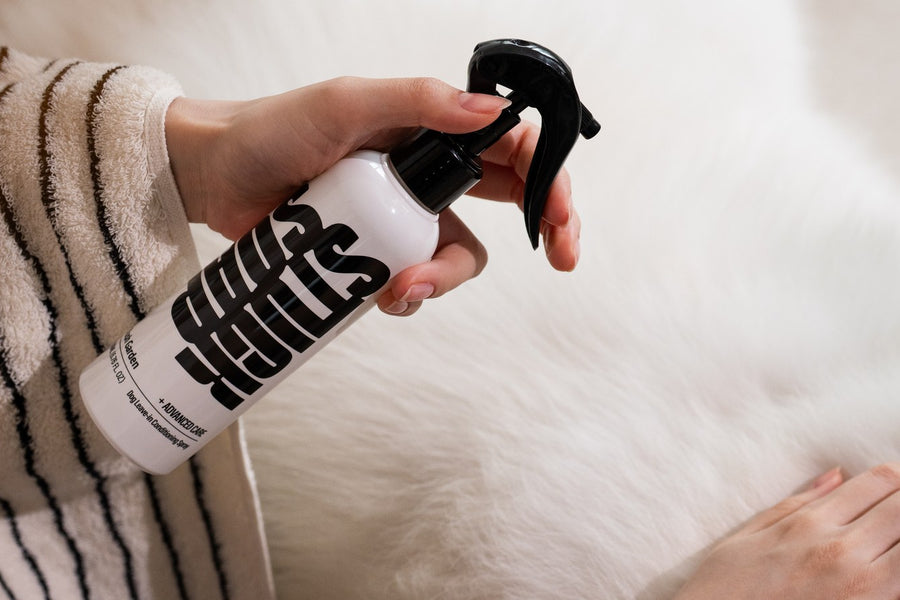
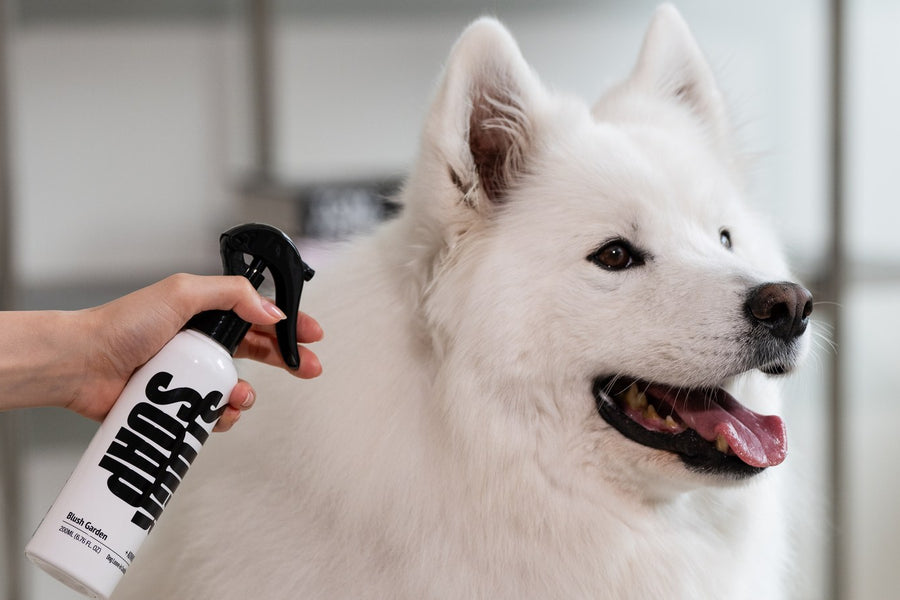
Once the fabrics are handled, a light coat step can round out the routine. Our no-rinse Leave-In Conditioning Spray is one option, though no spray stands in for a clean bed.
Frequently Asked Questions
Why does my dog smell after a bath so quickly?
Often the coat has picked up smell from unwashed bedding, blankets, collars or couch covers, or it stayed damp too long. Wash and fully dry those fabrics, then bathe your dog again on schedule. If the smell returns just as fast, or skin changes appear, see your veterinarian rather than doing more laundry.
How often should I wash my dog's bed?
A practical starting point is to wash removable covers and blankets every one to two weeks, and washable inserts every two to four weeks. The American Kennel Club says there are no fixed rules. Wash more often for heavy shedding, drool, outdoor adventures or household allergies, and whenever the bed smells or gets soiled.
Can a dirty collar make a clean dog smell?
Yes, it can contribute. A collar or harness sits against the coat for long stretches and goes through rain, mud and walks. Clean nylon gear according to its label, wipe leather instead of soaking it, and let everything dry fully. Buckling on clean gear after a bath keeps the neck from smelling stale.
What detergent should I use for dog bedding?
The American Kennel Club recommends a fragrance-free, pet-friendly detergent. A pet label alone does not make a product safer or better, so read the ingredients and follow the directions. Use the measured dose, consider an extra rinse for thick items, and store every laundry product where your dog cannot reach it.
Should I air dry or tumble dry a dog bed?
Follow the care label. The American Kennel Club says air drying is usually best for filled beds, since some fillings clump in a dryer. Whichever method you use, the bed should be completely dry inside before your dog returns to it, because a damp bed encourages mold and mildew to form.
Does hot water sanitize a dog bed?
Do not assume it does. Laundry research points to temperature as the leading factor in controlling pathogens, but home machines, fabrics and care labels vary widely, and most studies involve human clothing. Use the warmest setting your label permits, dry the item fully, and ask your veterinarian about any specific infection concern.
When is dog odor not a laundry problem?
Odor that returns quickly despite clean, dry bedding is not a laundry problem. Neither is odor that comes with itching, redness, greasy skin, smelly ears, or a strong smell from the mouth or rear end. Those signs need a veterinarian, who can examine your dog and work out what is going on.
Sources
- American Kennel Club: How to Clean Your Dog's Bed and Why It's Important
- Abney SE, Ijaz MK, McKinney J, Gerba CP. Laundry hygiene and odor control: state of the science. Applied and Environmental Microbiology, 2021
- PetMD: The Guide to Washing a Dog Bed
- PetMD: Can Dogs Be Allergic to Their Beds?
- Merck Veterinary Manual: Toxicoses From Household Cleaners and Personal Care Products in Animals
- ASPCA: Poisonous Household Products
- ASPCA: Animal Poison Control Alert: Keep Laundry Detergent Pods Away from Pets
Start with a clean coat. Pair fresh bedding with K-beauty grooming made for dog skin, in Silent Grove or Blush Garden. Shop at stucksoap.com.