

Why does my dog smell more in fall? Most of the time the answer is the coat itself: shed undercoat that never makes it out of the fur packs down against the skin, cuts off airflow, and holds moisture and skin oil in place, which is exactly the setup that turns a clean dog musty. Brush that loose hair out first, then bathe, and the seasonal smell usually loses its grip.
If your dog seemed perfectly fresh in August and now greets you with a faint, damp, slightly sour note every evening, you are not imagining it. Fall is a coat-change season for many dogs, and the change happens inside the fur before you see it on the couch. We think of shedding as hair that falls out. The trouble is the hair that doesn't.
This piece is the companion to our guide to fall shedding in dogs. That one covers the shed. This one covers what the shed does to smell, and the order of operations that fixes it.
Why Does My Dog Smell More in Fall? The Short Answer
Dogs that shed seasonally tend to do their heaviest shedding in spring and fall. The American Kennel Club puts the autumn version simply: "In fall, they shed lighter hair to make way for thicker insulation." (AKC)
That transition creates a window, often a few weeks long, where the old hair has released from the follicle but is still sitting in the coat. In a short, single coat it mostly drops out on its own. In a dense or double coat it gets caught by the new growth coming in underneath and stays put.
What "trapped undercoat" means
Trapped undercoat is loose, already-shed underfur that remains tangled in the coat instead of falling away. It forms soft, felted clumps close to the skin, and those clumps behave like a damp blanket: they hold water, hold oil, and keep air from moving across the skin.
How Trapped Undercoat Turns Into Odor
The STUCK SOAP team put it plainly when we planned this series: when shed hair stays inside the coat, it leads to smell and discomfort. Here is the chain behind that sentence.
- Loose hair packs down. Released undercoat gets caught in guard hairs and new growth, then compresses into clumps near the skin.
- Airflow drops. A coat that should breathe now has a dense layer sitting right on the skin. Less air moves through it, so it dries more slowly.
- Moisture lingers. Morning dew on the grass, rain walks, a drink-soaked chin, a bath that was never fully dried: all of it stays in the clumps longer than it would in an open coat.
- Sebum builds up. Skin naturally produces oil (sebum). Brushing normally spreads it along the hair shaft. When the coat is matted with old fur, the oil collects in the dead hair instead.
- The coat smells. Warm skin, damp fur, and stale oil held in one place is the recipe for that musty, "dog that came in from the rain" scent, even on a dog that hasn't been near rain.
The AKC notes that consistent grooming helps "remove loose hair and distribute natural skin oils." (AKC) In fall, that sentence is the whole odor story in reverse: when the loose hair stays and the oil can't spread, smell follows.
Trapped undercoat also explains the discomfort half of the equation. Packed clumps pull on the skin as your dog moves, and a coat that stays damp at the base is simply less pleasant to live in.
Which Coats Smell More in Fall
Not every dog gets the fall funk. Coat structure decides most of it. If you are not sure what you're working with, our dog coat types guide walks through each one.
| Coat type | Examples | Fall trapping risk | What usually happens |
|---|---|---|---|
| Double coat, dense | Husky, Golden Retriever, Corgi, Pomeranian | High | Undercoat releases in bulk and catches under guard hair; clumps sit at the skin. |
| Long single coat | Shih Tzu, Maltese, Yorkshire Terrier | Moderate | Less seasonal shed, but loose hairs knot into mats behind ears and legs. |
| Curly or wire coat | Poodle, Doodle mixes, terriers | Moderate | Shed hair stays in the curl or wire instead of falling, so it builds quietly. |
| Short single coat | Beagle, Boxer, Pug | Lower | Hair drops out readily; odor is more about skin oil than trapped fur. |
Brush First, Then Bathe: Why the Order Matters
This is the part most people get backward. The dog smells, so the dog goes in the tub. With a coat full of loose undercoat, that bath can make the problem worse.
What happens when you bathe a packed coat
- Water gets trapped. Wet undercoat clumps tighten and felt together. They soak up water and release it slowly, so the base of the coat stays damp for hours.
- Shampoo can't reach the skin. Lather sits on top of the clumps instead of moving down to the skin where oil and odor actually live. We explain the mechanics in how to get shampoo through a double coat.
- Residue stays behind. Whatever shampoo does get into a dense clump is hard to rinse back out. Leftover product plus lingering moisture is a common reason a dog smells off a day or two after a bath; see how to tell if shampoo residue is fully rinsed.
What brushing first does instead
Removing the dead hair before the bath opens the coat back up. Water reaches the skin, shampoo spreads evenly, rinse water runs clear faster, and the whole coat dries in less time.
A Fall De-Odor Routine, Step by Step
Here is the sequence we recommend for a dog that started smelling more in fall.
- Brush out on a dry coat. Never brush the undercoat out wet. Work in sections, starting at the back legs and moving forward. Use a slicker brush, then an undercoat rake for dense coats. The AKC recommends tools "that reach the undercoat where loose hair collects." (AKC)
- Check for clumps with a comb. Run a wide-tooth comb down to the skin. Where it snags, there is still trapped undercoat. Common trouble areas are behind the ears, the collar line, armpits, and the "pants" on the back legs.
- Stop when the brush comes back light. You are done when each pass collects only a little hair, not when the coat looks perfect.
- Bathe with lukewarm water. Wet the coat all the way to the skin, then work in a gentle, pH-balanced dog shampoo. Massage it down to the skin rather than scrubbing the surface.
- Rinse longer than feels necessary. Keep rinsing until the water runs clear and the coat feels squeaky near the skin, not slick.
- Dry to the base. Towel firmly, then use a cool or low-heat dryer while brushing, so the undercoat dries all the way down. Air-drying a thick coat in cool fall weather is how a clean dog ends up smelling damp again by dinner. Our complete guide to drying your dog covers technique.
- Brush once more when fully dry. Bathing loosens additional undercoat. A final pass pulls it out before it settles.
Between baths, a few minutes of brushing several times a week during peak shed keeps the coat from packing again. Our between-bath care routine has a simple weekly plan.
Is It the Season, or Is It Something Else?
Seasonal coat odor has a pattern: it appears gradually as the shed starts, it smells musty or damp rather than sharp, it sits across the coat rather than in one spot, and it improves noticeably once the dead hair is out and the coat is clean and fully dry.
If the smell is concentrated in one area, our dog odor map can help you pinpoint where the smell is coming from. And if your dog's coat feels greasy even when freshly brushed, read our oily coat bathing plan.
When to call your veterinarian
Grooming handles coat odor. It does not handle skin or health problems, and a strong smell can be a sign of one. Veterinary dermatologists quoted by the AKC say secondary yeast or bacterial infections of the skin or ears are the most common medical reasons dogs smell. (AKC) The Merck Veterinary Manual describes seborrhea as a condition involving increased scaling and "occasionally excessive greasiness of the skin and hair coat." (Merck Veterinary Manual)
See your veterinarian if you notice any of these:
- A sudden, strong, or worsening odor
- Greasy, flaky, or scaly skin
- Redness, sores, crusts, or darkened skin
- Frequent scratching, licking, or chewing
- Smelly ears, head shaking, or discharge
- Scooting or a fishy smell near the tail (anal glands)
- Bad breath or red gums (dental disease)
- Patchy hair loss beyond normal shedding
Don't try to cover these smells. The same AKC article reports that masking odors with spray-on fragrances or perfumes can cause more skin irritation.
Practical Takeaways for Fall Coat Odor
- The fall smell usually comes from shed undercoat that stays in the coat, not from a dirty dog.
- Trapped clumps cut airflow and hold moisture and sebum against the skin.
- Brush the dead hair out on a dry coat before every fall bath.
- Rinse thoroughly and dry the coat all the way to the skin.
- Sudden, strong, or localized odor, or any skin change, is a vet visit.
Where STUCK SOAP Fits in the Routine
Products come after the brush, not instead of it. For the bath step, our Liquid Shampoo and Shampoo Bar are built for exactly this moment: pH-balanced for dog skin, made with Green Tea, Camellia Oil, and Centella Asiatica, and formulated for sebum control and skin-barrier support. The fine-bubble lather moves easily through a freshly opened coat, and because the shampoo is high-concentrate, one pump is enough, so there is less product left to rinse out.
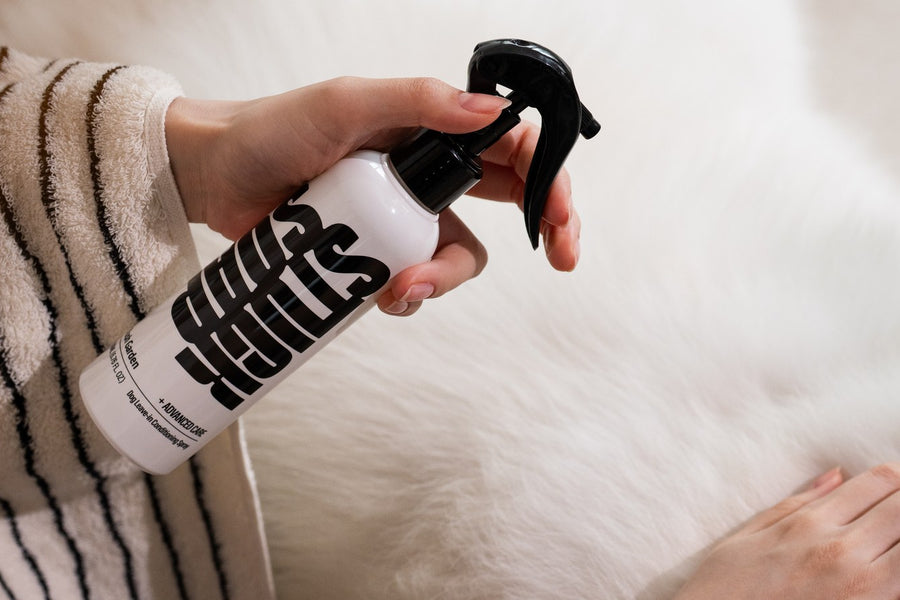
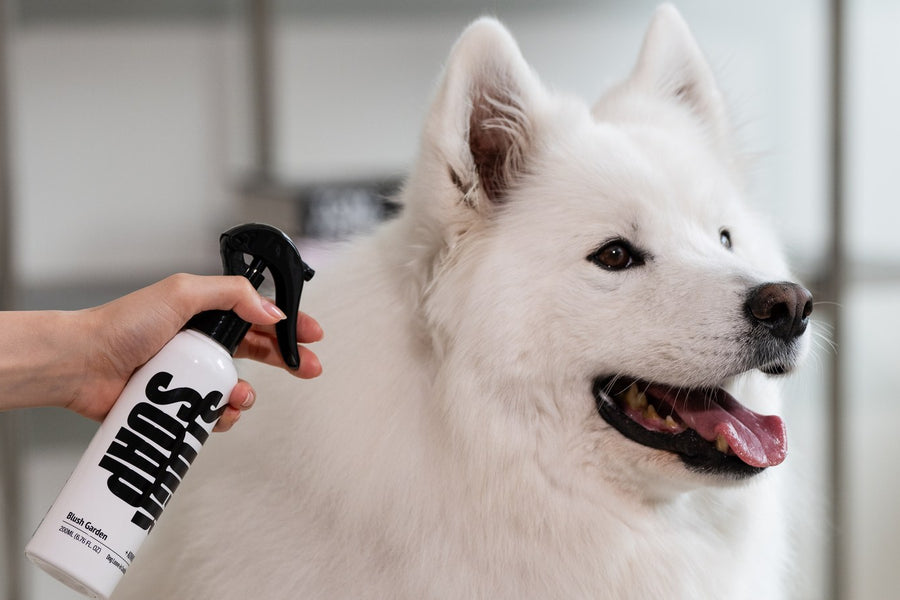
Between baths, our Leave-In Conditioning Spray is a light, no-rinse step to mist on after a brushing session. It pairs Mung Bean Sprout Extract (KR patent 10-1841429), Tannin Complex HR (10-0955389), and ODOR-BYE (10-2746186), three patented actives we chose for coat conditioning and everyday freshness care. It is grooming care, not a perfume, and not a substitute for a vet visit when odor signals something more. More on the category in our leave-in conditioner guide.
The shampoos and the spray all come in Silent Grove (earthy) and Blush Garden (floral) at stucksoap.com.
FAQ: Why Does My Dog Smell More in Fall?
Why does my dog smell more in fall?
Many dogs shed undercoat in fall as their winter coat grows in. When that loose hair stays tangled in the coat, it forms clumps near the skin that block airflow and hold moisture and skin oil. That damp, oily layer is what creates the musty seasonal smell most owners notice in autumn.
Should I brush or bathe my dog first?
Brush first, on a dry coat. Bathing a coat packed with loose undercoat lets the clumps soak up water and tighten, so shampoo can't reach the skin and residue is hard to rinse. Removing dead hair first lets water, shampoo, and rinse water move freely and helps the coat dry faster.
How often should I brush my dog during fall shedding?
Heavy shedders often need brushing several times a week, or even daily, during peak shedding. Lighter shedders still benefit from regular sessions. A useful rule is to brush until each pass collects only a little hair, then check down to the skin with a comb for any clumps you missed.
Can a bath make my dog smell worse?
It can, if the coat is full of trapped undercoat or isn't dried properly. Wet clumps hold water against the skin for hours, and leftover shampoo adds to the problem. Brushing out first, rinsing until the water runs clear, and drying the coat all the way to the base usually prevents that post-bath smell.
Which dogs are most likely to smell more in fall?
Dogs with dense double coats, such as Huskies, Golden Retrievers, Corgis, and Pomeranians, are most prone because their undercoat releases in bulk and gets caught under the outer coat. Long, curly, and wire coats can trap shed hair too. Short single coats tend to drop loose hair more easily.
When is dog odor a reason to see the vet?
See your veterinarian for a sudden, strong, or worsening smell, or odor alongside greasy or scaly skin, redness, sores, frequent scratching, smelly ears, scooting, or bad breath. Skin and ear infections, anal gland issues, and dental disease can all cause odor, and they need a veterinary diagnosis rather than more grooming.
Sources
- American Kennel Club. Dog Shedding: What to Expect and How to Manage It.
- American Kennel Club, Roxanne Hawn. Why Does My Dog Smell So Bad?
- Merck Veterinary Manual, Pet Owner Version. Seborrhea in Dogs.
- American Veterinary Medical Association. Pet Care.
Start Fall With an Open, Clean Coat
Brush first, bathe gently, dry all the way down. When you're ready for the bath step, find our pH-balanced shampoo, zero-waste Shampoo Bar, and Leave-In Conditioning Spray at stucksoap.com.