

Mung bean sprout extract for dogs is a botanical ingredient taken from mung beans that have been allowed to germinate, rather than from the dry seed. The sprout matters because germination rewrites the bean's chemistry: stored starch and protein get broken down, and the flavonoid profile, led by vitexin and isovitexin, shifts and grows.
That second sentence is the whole reason formulators bother with the extra step. A dry mung bean is a sealed pantry built to sit on a shelf for months. A sprout is the same pantry with the doors thrown open and the contents being rearranged for growth. If you have already read our general introduction to mung bean in K-beauty, consider this the sequel. Here we stay on one question: what changes when the bean sprouts, and why that change made it one of three patented actives in our leave-in spray.
What Is Mung Bean Sprout Extract for Dogs?
A working definition
Mung bean sprout extract is a concentrate of the water- and alcohol-soluble compounds found in germinated mung beans (Vigna radiata), collected by steeping the young sprouts in a solvent and filtering out the plant solids. In grooming products for dogs, it appears as a skin-conditioning botanical, not as a cleanser or a medicine.
On an ingredient list it usually reads as Vigna Radiata Sprout Extract. That one word, sprout, separates it from Vigna Radiata Seed Extract, which is made from the dry bean. If you want a refresher on how to decode those Latin names, our guide on how to read dog shampoo ingredients walks through it.
Seed, sprout, extract: three different things
People tend to blur these together, so it helps to pull them apart. The seed is the dormant bean. The sprout is that bean a few hours to a few days into germination, with a root pushing out and its internal chemistry in motion. The extract is what a manufacturer pulls out of either one. Two extracts can share a plant name and still carry quite different compound profiles, because they started from different stages of the plant's life.
What Changes When a Mung Bean Sprouts
Germination is the moment a seed stops waiting and starts spending. Soaked in water and kept warm, the bean switches on enzymes that break its reserves into smaller pieces it can use to build a root and a shoot. Researchers have mapped this process in mung beans in unusual detail, partly because the sprouts are such a common food across Asia.
Stored starch and protein get spent
A dry mung bean is mostly carbohydrate, with starch as the main one, plus a good deal of protein. A review of mung bean and sprout chemistry in Chemistry Central Journal describes how proteins are cleaved during sprouting, raising the levels of most free amino acids. The same review reports that the sugars raffinose and stachyose "are completely eliminated during germination," while sucrose rises briefly and then falls as the seedling burns through it.
The flavonoid profile shifts
Flavonoids are a large family of plant pigments and defense compounds. In mung beans, the standouts are vitexin and isovitexin, two closely related apigenin glycosides. They are already present in the dry seed, and a 2026 study in Food Chemistry: X found that the hull holds most of them. What germination changes is the overall mix. The same team tracked sprouts from 4 to 48 hours and reported "time-dependent changes in flavonoid composition during early mung bean germination," with several additional apigenin glycosides accumulating as the sprout developed.
Total quantities move too. In a widely cited Cornell study in the Journal of Agricultural and Food Chemistry, germination raised total phenolic content in mung bean sprouts up to 4.5 times, and total flavonoids up to 6.8 times, the levels measured in the original seeds. Those figures describe the plant tissue on a dry-weight basis over several days of sprouting. They say nothing about what happens on skin or fur.
Vitamin C appears, defense proteins fade
The Cornell team also found vitamin C climbing sharply over eight days of germination, peaking at almost 24 times the seed's starting level. Meanwhile, the Chemistry Central Journal review notes that trypsin inhibitors, proteins the seed uses to deter pests, gradually decline during the first five days of germination. In short, the sprout trades some of its storage and defense chemistry for compounds tied to active growth.
Raw Mung Bean vs. Mung Bean Sprout at a Glance
Here is how the two stages compare on the points that matter most to someone choosing a raw material. Every row describes plant chemistry reported in the sources noted; none of it is a claim about results on dogs.
| What changes | Dry mung bean (seed) | Germinated mung bean (sprout) | Why a formulator cares |
|---|---|---|---|
| Starch and sugars | Starch-dominant storage tissue; contains raffinose and stachyose | Reserves being spent; raffinose and stachyose eliminated (Tang et al., 2014) | Less heavy carbohydrate competing for space in the extract |
| Protein | Large storage proteins | Broken down, raising most free amino acids (Tang et al., 2014) | Smaller, more soluble molecules come through extraction |
| Flavonoids | Vitexin and isovitexin present, concentrated in the hull | Total flavonoids up to 6.8x seed levels; new apigenin glycosides accumulate (Guo et al., 2012; Wintersohle et al., 2026) | A richer, time-dependent profile to select for |
| Total phenolics | Baseline | Up to 4.5x seed levels over several days (Guo et al., 2012) | More of the compound class many botanical extracts are chosen for |
| Vitamin C | Low | Up to about 24x seed levels by day eight (Guo et al., 2012) | Another marker that the tissue is metabolically active |
| Defense proteins | Trypsin inhibitors present | Gradual decline over the first five days (Tang et al., 2014) | Fewer seed-protection compounds carried into the raw material |
Why Formulators Use the Sprout, Not the Bean
Cosmetic chemists rarely pick a botanical just for its name. They pick a specific part of a plant, at a specific stage, processed a specific way, because each choice changes what ends up in the bottle. Sprouting is one of those choices, the same way fermentation is a choice. Our piece on galactomyces, K-beauty's fermented essence covers another example of a botanical that gets transformed before it is used.
The sprout is a chemical snapshot
Because the profile keeps changing hour by hour, a sprout harvested at 24 hours and one harvested at five days are not interchangeable. That sounds like a complication, but for a formulator it is a dial. Korean cosmetic researchers at Seoul National University of Science and Technology compared seed and sprout extracts of mung bean in laboratory tests and found the results depended on how long the sprouts had germinated, with the authors pointing to vitexin as a key contributor. The takeaway for our purposes is simple: in the lab, stage changed the extract.
Less storage, more of the compounds you came for
A dry bean is built for shelf life, which means lots of starch and protein and a relatively quiet chemistry. Extract it and you pull plenty of that bulk along with the compounds of interest. Germination spends much of the bulk and raises the phenolic and flavonoid fraction, so the starting material leans toward the part of the plant formulators are usually trying to capture.
How a sprout extract is typically made
Every supplier has its own conditions, and proprietary methods are exactly that. In general terms, the published research and common industry practice follow a pattern like this:
- Soak. Clean, dry beans are soaked in water for several hours to wake the seed.
- Germinate. The beans are kept warm, damp and often dark for anywhere from about half a day to several days, depending on the profile wanted.
- Harvest. Sprouts are collected at the chosen stage, since the chemistry keeps moving if they are left longer.
- Extract. The sprouts are steeped in water, alcohol or a blend to draw out soluble compounds, then filtered.
- Standardize. The extract is tested and adjusted so each batch falls within a consistent specification before it goes into a formula.
What "standardized" means on a label
Standardization is the quiet step that separates a cosmetic raw material from kitchen sprout water. It means the supplier measures the extract against set markers and keeps batches consistent. You will not usually see the specification on a pet product label, but it is part of why a named, sourced extract is different from a generic plant juice.
Why STUCK SOAP Chose Mung Bean Sprout Extract for Dogs' Leave-In Care
When we built the Leave-In Conditioning Spray, the starting question was different from the one behind our shampoos. A shampoo is on the coat for a few minutes, then rinsed away. A leave-in stays there until the next bath. That changes the math on every ingredient, because whatever goes into the bottle is what your dog wears for days. Our explainer on what a leave-in conditioner does and doesn't do for dogs goes into that difference.
A no-rinse product raises the bar
For something that is not rinsed, we wanted botanicals whose chemistry is well documented, plant-based and vegan, and familiar to Korean skincare. Mung bean sprout extract fit all three. Its composition during germination has been studied in peer-reviewed literature for more than a decade, and mung bean has a long history in K-beauty. That record mattered more to us than novelty.
It also fits the way we think about grooming in general, which starts with the skin under the coat rather than the shine on top. The Merck Veterinary Manual describes a dog's skin as its largest organ, one that "provides a protective barrier against the environment." Our skin-first grooming philosophy lays out why we design around that layer.
One of three patented actives
The specific mung bean sprout extract in the spray is covered by a registered Korean patent, No. 10-1841429. It works alongside two other patented actives: Tannin Complex HR (Korean patent No. 10-0955389), which we covered in our article on tannins for dog skin, and ODOR-BYE (Korean patent No. 10-2746186). We think of the three as a set, each picked for a different reason. The patents document the ingredients; they are not a promise of any particular result on your dog, and we do not present them that way.
Practical Takeaways for Reading Botanical Labels
- Look at the plant part and stage. "Sprout extract" and "seed extract" are different raw materials, even from the same plant.
- Treat lab data as plant data. A flavonoid jump in sprouting beans describes the bean. It is not evidence about a finished grooming product on a dog.
- Weigh rinse-off and leave-on differently. Ingredients in a leave-in stay on the coat, so a short, well-understood list is worth more there.
- Read "patented" as documentation, not a result. A patent shows an ingredient or process was registered; it is not a performance claim.
- Send skin problems to the vet. Itching, redness, flaking, hot spots or odor that keeps coming back call for a veterinarian, not a new spray. Dry indoor air can play a part too, as we explain in indoor heating and dog dry skin.
Where It Lives in the STUCK SOAP Lineup
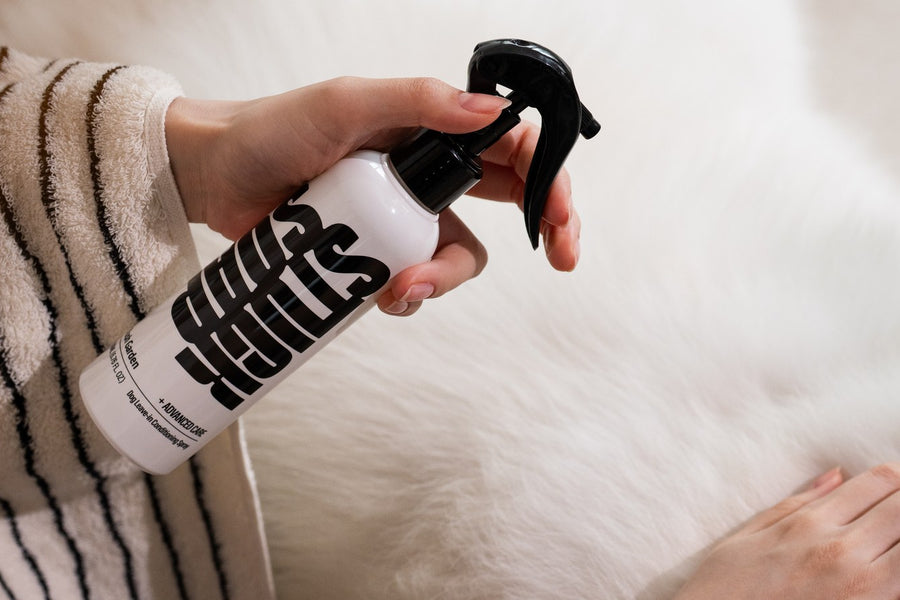
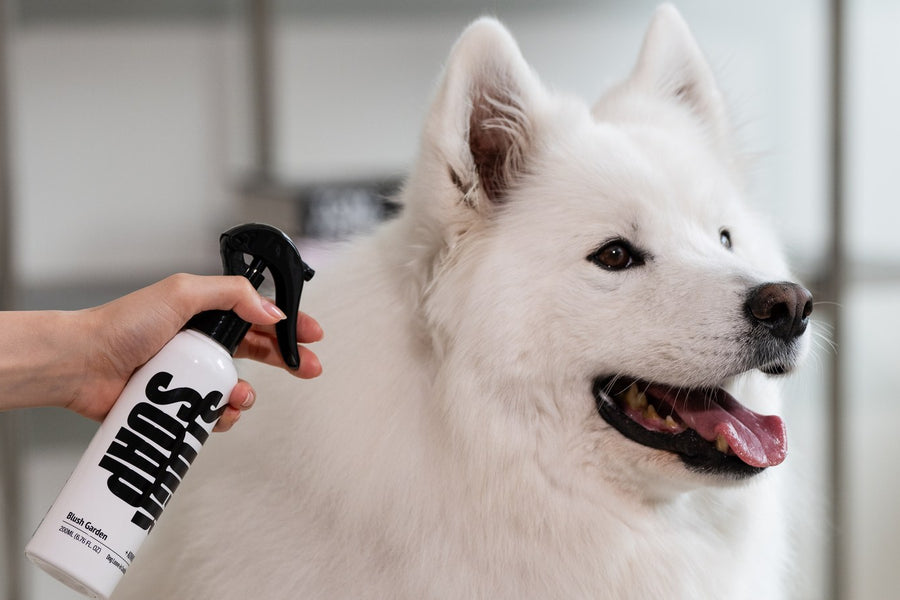
Mung bean sprout extract is one of the three patented actives in our Leave-In Conditioning Spray, a lightweight, no-rinse spray for between baths or after one, made in the same two scents as our shampoos: earthy Silent Grove and floral Blush Garden. It is $24 at stucksoap.com and is also available on Amazon. It is a non-medicated cosmetic grooming product. For the spray-and-brush routine, see how to use leave-in conditioner on dogs.
Frequently Asked Questions
What is mung bean sprout extract for dogs?
It is a botanical concentrate made from germinated mung beans, not dry seeds, collected by steeping young sprouts in water or alcohol and filtering out the solids. In dog grooming products it is used as a skin-conditioning ingredient. It is a cosmetic component, not a medicine, and it does not treat any skin condition.
How is a mung bean sprout different from a mung bean?
Germination changes the bean's chemistry. Enzymes break down stored starch and protein, sugars such as raffinose disappear, and the flavonoid mix shifts. One Cornell study measured total flavonoids in sprouts at up to 6.8 times seed levels. Those numbers describe the plant itself, not any effect on a dog's skin or coat.
What are vitexin and isovitexin?
Vitexin and isovitexin are closely related flavonoids, specifically apigenin glycosides, and they are the main flavonoids in mung beans. They exist in the dry seed, mostly in the hull, and the wider flavonoid profile changes as the bean sprouts. Researchers often track them when they study how mung bean chemistry changes during germination.
Why do cosmetic formulators use sprout extract instead of seed extract?
Sprouting spends much of the seed's starch and protein while raising its phenolic and flavonoid content, so the starting material leans toward the compounds formulators usually want. Because the chemistry changes with every hour of germination, harvest timing also gives formulators a way to choose a specific profile and keep batches consistent.
Is mung bean sprout extract safe to leave on my dog's coat?
It is used here as a cosmetic ingredient in a product designed to stay on the coat, but every dog is different. Patch test a small area first and watch for a day. If you see redness, itching or flaking, stop using the product and talk to your veterinarian about what is going on.
What does the Korean patent 10-1841429 mean for the spray?
It means the specific mung bean sprout extract used in the Leave-In Conditioning Spray is covered by a registered Korean patent. A patent documents an ingredient or process; it is not a promise of results. The spray also contains two other patented actives, Tannin Complex HR and ODOR-BYE, each chosen for a different reason.
Sources
- Guo X, Li T, Tang K, Liu RH. Effect of germination on phytochemical profiles and antioxidant activity of mung bean sprouts (Vigna radiata). Journal of Agricultural and Food Chemistry, 2012
- Tang D, Dong Y, Ren H, Li L, He C. A review of phytochemistry, metabolite changes, and medicinal uses of the common food mung bean and its sprouts (Vigna radiata). Chemistry Central Journal, 2014
- Wintersohle C, et al. Dynamics in the polyphenolic profile of sprouted mung bean (Vigna radiata L.): Impact of short-term germination and dehulling. Food Chemistry: X, 2026
- Jeong YM, Ha JH, Noh GY, Park SN. Inhibitory effects of mung bean (Vigna radiata L.) seed and sprout extracts on melanogenesis. Food Science and Biotechnology, 2016
- Merck Veterinary Manual: Structure of the Skin in Dogs
Try the Sprout-Powered Leave-In
A light, no-rinse finish with three patented actives, in Silent Grove or Blush Garden. Find the Leave-In Conditioning Spray at stucksoap.com.