

Tannins for dog skin are plant polyphenols that grooming products use for their astringent, protein-binding character: they give a coat a cleaner, lighter, less slick feel. In a leave-in spray, a tannin ingredient is a cosmetic coat-care tool, not a medicine, and that's the role it plays in ours.
If you have ever sipped strong black tea and felt your mouth go dry and tight, you already know what a tannin feels like. That same family of molecules has tanned leather, waterproofed paper, dyed work clothes on Jeju Island, and written medieval manuscripts. Today one of them, Tannin Complex HR, sits in the STUCK SOAP Leave-In Conditioning Spray. Here's what tannins are, where they come from, what they do in cosmetics, and where their job stops.
Tannins for Dog Skin: The Short Answer
Tannins are a large group of naturally occurring polyphenols found in tea leaves, oak bark, chestnut wood, persimmons, grape skins, and many other plants. Their defining trait is that they bind to proteins. A 2025 review in Global Challenges describes tannin as "an old natural product consisting of a mixture of oligomeric polyphenolic compounds." (Ciriminna et al., PMC)
In cosmetics, that protein-binding habit shows up as astringency: the tight, clean, "squeaky" feel you associate with a toner. On a dog, a tannin ingredient in a leave-in product is there for coat feel and grooming comfort between baths. It is not there to treat any skin condition.
What Are Tannins? A Plant Chemistry Primer
Where tannins come from
Plants make tannins largely as a defense: their bitter, mouth-drying taste discourages animals and insects from eating leaves, bark, and unripe fruit. It's why an unripe persimmon is so puckering.
Common cosmetic and traditional sources include green and black tea, oak bark and oak galls, sweet chestnut wood, persimmon fruit, witch hazel, and grape skins and seeds.
Two main families
Chemists usually sort tannins into two broad groups:
- Hydrolyzable tannins, which break down in water or digestion into simpler pieces such as gallic acid. The Global Challenges review notes they "are generally sourced from sweet chestnut and oak wood and bark." (PMC)
- Condensed tannins (proanthocyanidins), the type found in tea leaves, grape seeds, and many fruits.
The difference matters later: veterinary references link the hydrolyzable tannins in oak and acorns to poisoning when animals eat them.
A Short History of Tannins: Leather, Persimmon, Ink, and Tea
Long before anyone put tannins in a skin care bottle, people used them as tools.
Leather: where the word comes from
"Tannin" comes from tanning, the old craft of turning raw animal hide into leather by soaking it in bark solutions, often oak. The tannins bind to the collagen in the hide, which stops it from rotting and makes it tough and flexible. The Global Challenges review sums it up: tannin was "traditionally employed in the leather industry due to its binding with collagen." (PMC)
Persimmon tannin: kakishibu and Jeju's galot
In Japan, the fermented juice of unripe persimmons, called kakishibu, has long been brushed onto paper, cloth, wood, and fishing nets to color and weatherproof them. Korea has its own tradition. On Jeju Island, off Korea's southern coast, farmers and fishers wore galot: cotton clothing dyed with green persimmon juice. A study in Acta Horticulturae notes that "Persimmon fruit tannin, when used as a dye, is known to strengthen the cotton fabrics." (Park et al., ISHS) The fabric turns a warm reddish brown as the tannins oxidize in the sun.
Ink: oak galls and iron
Oak galls, the small round growths that form on oak trees, are packed with tannins. Mixed with iron salts, they produce iron gall ink, a dark, durable ink used across Europe for centuries of letters, legal records, and manuscripts.
Tea and wine: tannins you can taste
The dry, slightly rough feel of strong black tea or a young red wine is tannins binding to proteins in your saliva: astringency you can taste.
| Source | Tannin family | Traditional use | What it shows about tannins |
|---|---|---|---|
| Oak bark | Mostly hydrolyzable | Tanning hides into leather | Binds collagen and other proteins |
| Unripe persimmon | Condensed | Kakishibu (Japan), galot clothing (Jeju) | Strengthens and colors fibers |
| Oak galls | Hydrolyzable | Iron gall ink | Reacts with iron to form dark pigment |
| Tea leaves | Condensed | Everyday drink | Astringent, mouth-drying feel |
| Grape skins and seeds | Condensed | Red wine | Texture and "grip" on the palate |
| Chestnut wood | Hydrolyzable | Leather tanning extracts | Durable, protein-binding extract |
What Tannins Do in Cosmetics
Human skin care has used tannin-rich plants for generations. Witch hazel toner is the classic example, and we covered its tannin-heavy profile and safety points in our post on witch hazel for dogs. Researchers writing in the Journal of Clinical and Aesthetic Dermatology put it simply: "In cosmetics, tannins have astringent activity, which can bind to skin proteins." (Ditthawutthikul et al., PMC)
The astringent feel
Astringency is a sensory effect: a tighter, cleaner, less greasy feel. In a coat product, it means hair that feels light and separate instead of heavy.
Protein binding
Hair is built mostly from keratin, a protein. Because tannins are drawn to proteins, a tannin ingredient interacts with the surface of the hair rather than just sitting in the water of a formula. That's the same affinity that made tannins useful to leather makers, at a far gentler cosmetic scale.
A polyphenol, like green tea
Tannins belong to the polyphenol family, the same broad group as the catechins in green tea, a key ingredient in our shampoo. See our guide to green tea extract for dogs.
| A cosmetic tannin's job | Not a cosmetic tannin's job |
|---|---|
| Giving the coat a clean, light, less slick feel | Treating dermatitis, hot spots, or infections |
| Supporting a tidy, separated coat between baths | Stopping itching or scratching caused by a medical problem |
| Contributing to a polyphenol-based ingredient profile | Healing wounds, sores, or broken skin |
| Working alongside other leave-in ingredients | Replacing a diagnosis or treatment plan from your veterinarian |
Why STUCK SOAP Chose Tannin Complex HR for Dog Coat Care
The formulation reasoning
Our Leave-In Conditioning Spray is a no-rinse product, so whatever goes in it stays on the coat. A leave-in has to condition without leaving the coat greasy or heavy, a balance we explain in what a leave-in conditioner for dogs actually does.
Tannins are one of the oldest astringent ingredient classes in cosmetics, so we chose a tannin ingredient, Tannin Complex HR (KR patent 10-0955389), to support a clean, light-feeling coat between baths. Think of it as the counterweight in the formula: the part of the spray meant to keep "conditioned" from turning into "coated."
One of three patented actives
Tannin Complex HR works alongside two other patented ingredients, each chosen for a different job:
- Mung Bean Sprout Extract (KR patent 10-1841429), a plant-derived conditioning ingredient chosen for a soft coat feel. More in our post on mung bean for dogs.
- Tannin Complex HR (KR patent 10-0955389), chosen for its astringent, coat-tidying role.
- ODOR-BYE (KR patent 10-2746186), chosen for everyday freshness care between baths.
None of these make the spray a treatment. They reflect our skin-first grooming philosophy.
Tannins on the Coat vs. Tannins in the Stomach: A Safety Note
A tannin ingredient formulated into a topical grooming product is a very different situation from a dog eating tannin-rich plant material.
Acorns and oak leaves
Fall is acorn season, and many dogs treat them like toys. The American Kennel Club warns that acorns "contain compounds called tannins that are harmful to dogs," and they can also cause choking or intestinal blockage. (AKC) The Merck Veterinary Manual is direct: "The toxic effects following oak consumption are due to the actions of tannins," and it names hydrolyzable tannins as the culprits. (Merck Veterinary Manual)
What to do if your dog eats something
- Remove any remaining acorns, leaves, or plant material from your dog's mouth and reach.
- Call your veterinarian right away, or the ASPCA Animal Poison Control Center.
- Don't wait for symptoms, and don't induce vomiting unless a vet tells you to.
Grapes and raisins are also dangerous for dogs, but for reasons unrelated to this topic, so treat any grape or raisin snack as a call to the vet too. And as with any grooming product, keep the spray bottle out of reach and away from your dog's face, eyes, and mouth.
What Tannins for Dog Skin Can't Do: When to See Your Vet
A good grooming routine can make a healthy coat look and feel its best. It can't fix a skin problem, and it shouldn't hide one. The AKC lists flaking, scaling, hair loss, and inflammation among signs of dry skin and recommends consulting a veterinarian to rule out more serious conditions. (AKC) Book a vet visit if you notice:
- Red, raw, moist, or oozing patches
- Scabs, bumps, sores, or broken skin
- Patchy hair loss beyond normal shedding
- Persistent scratching, licking, chewing, or a strong odor from the skin
Don't apply any leave-in product, ours included, to irritated or broken skin. For background on how healthy skin protects itself, read understanding your dog's skin barrier, and the Merck Veterinary Manual's overview of the structure of the skin in dogs.
Practical Takeaways
- Tannins are plant polyphenols that bind proteins. In cosmetics, that means an astringent, clean-feeling finish.
- Their history is practical: leather, persimmon-dyed cloth, iron gall ink, tea, and wine all rely on the same chemistry.
- On a dog's coat, a tannin ingredient is about coat feel between baths, not treatment.
- Eaten, tannin-rich oak and acorns are a hazard. Call your vet if your dog eats them.
- Before trying any new leave-in, run a quick patch test on a small area and watch for 24 hours.
- Use a light hand: one mist, brushed through. See our between-bath care guide.
Where Tannin Complex HR Lives: The Leave-In Conditioning Spray
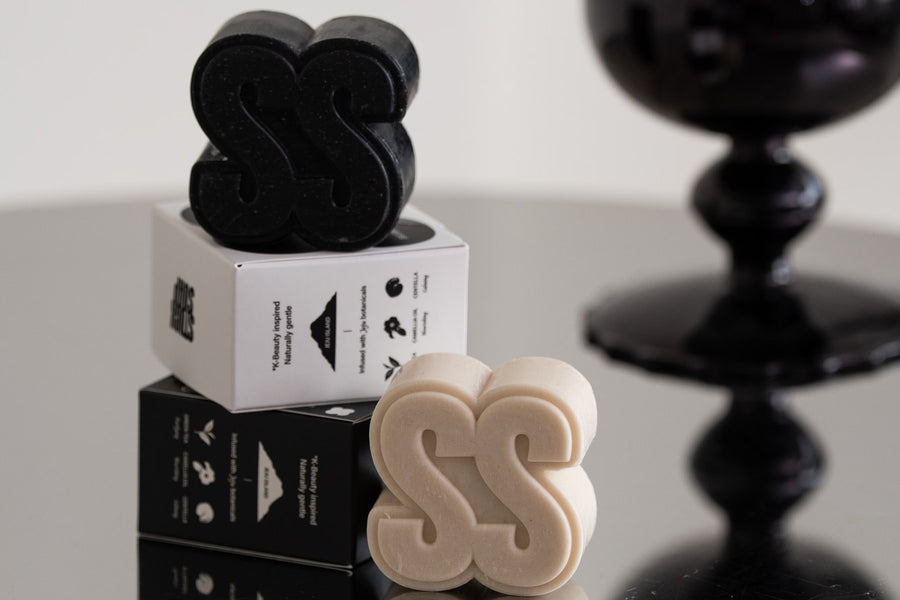
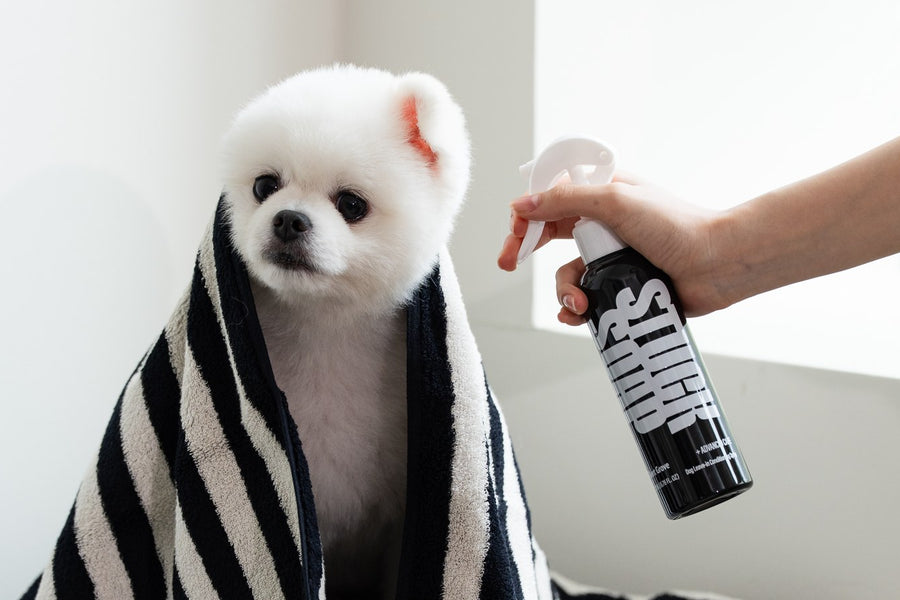
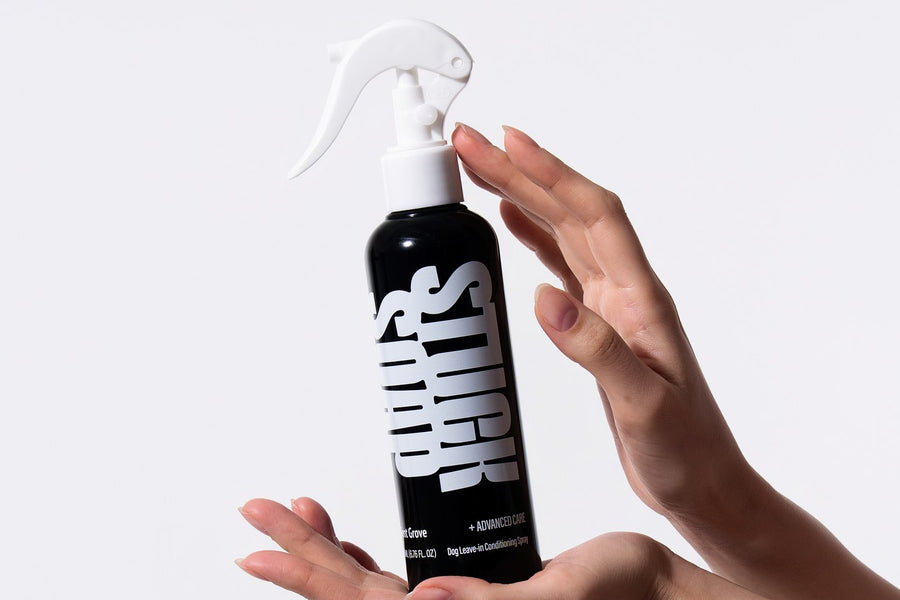
The STUCK SOAP Leave-In Conditioning Spray is a lightweight, no-rinse mist built around three patented actives: Mung Bean Sprout Extract, Tannin Complex HR, and ODOR-BYE. It comes in our two signature scents, Silent Grove (earthy) and Blush Garden (floral), and pairs with our pH-balanced Liquid Shampoo or zero-waste Shampoo Bar on bath day. Find it for $24 at stucksoap.com.
FAQ: Tannins for Dog Skin and Coat
What are tannins?
Tannins are naturally occurring plant polyphenols found in tea, oak bark, chestnut wood, persimmons, witch hazel, and grape skins. Their defining trait is binding to proteins. That property made them useful for tanning leather, dyeing cloth, and making ink, and it gives cosmetics an astringent, clean, slightly tight feel on skin and hair.
What do tannins do in dog grooming products?
In a grooming product, tannins are used for their astringent, protein-binding character, which helps a coat feel clean, light, and less slick. In a leave-in spray, that balances conditioning ingredients so the coat doesn't feel heavy. They are cosmetic ingredients for coat feel and do not treat or prevent any skin condition.
Why is Tannin Complex HR in the STUCK SOAP spray?
We chose Tannin Complex HR (KR patent 10-0955389) because tannins are classic astringent polyphenols in cosmetics. In a no-rinse spray, it supports a clean, light-feeling coat between baths, working alongside Mung Bean Sprout Extract for softness and ODOR-BYE for freshness care. It is a cosmetic choice, not a medical one.
Can tannins treat hot spots or itchy skin on dogs?
No. A cosmetic tannin ingredient is for coat feel and grooming, not for treating hot spots, dermatitis, infections, or itching. Red, moist, scabbed, or broken skin, hair loss, or constant scratching need a veterinarian. Don't apply leave-in grooming products to irritated or broken skin unless your vet says it's fine.
Are acorns and oak leaves dangerous for dogs?
Yes. The American Kennel Club and the Merck Veterinary Manual both link oak and acorn toxicity to tannins, and acorns can also cause choking or intestinal blockage. If your dog eats acorns or oak leaves, call your veterinarian or the ASPCA Animal Poison Control Center right away rather than waiting for symptoms.
Is witch hazel a source of tannins?
Yes. Witch hazel is one of the best-known tannin-rich plants in skin care and the backbone of many classic toners, which is why it feels astringent. Products made for people aren't automatically suitable for dogs, though, so check the full formula, avoid the face, and patch test before using any new product.
Sources
- Ciriminna R, Li Petri G, Angellotti G, et al. Tannin: An Insight into its Cosmeceutical Properties and Uses. Global Challenges, 2025 (PMC).
- Ditthawutthikul N, Saithong P, Thawee P, et al. Management of Seborrhea and Enlarged Pore Size with a Hydrogel Containing Ficus Fistulosa Extract. Journal of Clinical and Aesthetic Dermatology, 2021 (PMC).
- Park JH, Kim CH, Suh HD, et al. Cultivar and Maturity Effect on Dyeing Properties of Persimmon Fruit Juice. Acta Horticulturae 685, 2005.
- Merck Veterinary Manual, Robert H. Poppenga. Oak Toxicosis in Animals.
- Merck Veterinary Manual, Pet Owner Version. Structure of the Skin in Dogs.
- American Kennel Club. Can Dogs Eat Acorns and Other Tree Nuts?
- American Kennel Club. Dry Skin on Dogs: Signs, Symptoms, Treatments.
- ASPCA. Animal Poison Control Center.
An Old Ingredient, a Lighter Coat
Tannins have been working for people for thousands of years. Now one works on your dog's coat between baths. Try the Leave-In Conditioning Spray in Silent Grove or Blush Garden at stucksoap.com.