


The Fall Itch Calendar: Getting Ahead of Ragweed Allergies in Dogs
Ragweed allergies in dogs follow a schedule you can actually put on a calendar: pollen shows up in mid-August, peaks through September, and shuts down at the first hard frost. Because the timing is that predictable, the highest-leverage move is raising your dog's bathing frequency before the scratching starts, rather than scrambling once the paws are already raw.
Most owners run this backwards. They keep their normal three-week bath rhythm through August, notice the licking around Labor Day, and only then start washing more often, at the exact point the coat is carrying its heaviest pollen load of the year. This article is not about washing technique. It is about when to wash, how often, and what to watch for in each stretch of the season.
Ragweed Season Has a Start Date, a Peak, and an End
Ragweed is a late-summer weed that releases enormous quantities of lightweight pollen designed to travel on wind. One plant can put out pollen that drifts for hundreds of miles, which is why your dog can react in a neighborhood with no visible ragweed anywhere on the block. The Asthma and Allergy Foundation of America tracks the same seasonal pattern for humans, and dogs are exposed to the identical airborne load, just closer to the ground.
The regional variation is real. Northern states tend to see ragweed start in the second week of August and finish with an early-October frost. The Southeast and Southwest often run several weeks longer, sometimes into November. Checking a local pollen forecast such as pollen.com once a week during the season costs nothing and tells you whether to hold your cadence or ease off.
Why mid-August matters more than September
Allergic skin reactions build. Pollen lands on the coat, works down to the skin, and stays in contact for as long as it takes for something to remove it. A dog who walks twice a day through a rising pollen count is accumulating exposure hours before any visible symptom appears. By the time you see the first paw-licking session, the skin has usually been dealing with allergen contact for a week or more.
That lag is the entire argument for a calendar. Starting your increased cadence in mid-August means the coat never gets to carry a full week's accumulation into the peak.
Why Ragweed Allergies in Dogs Reward a Calendar, Not a Reaction
Definition: Surface allergen load is the amount of pollen and other airborne particles sitting on a dog's coat and skin at any moment. Bathing does not change how a dog's immune system responds to ragweed. It changes how much ragweed is physically there to respond to.
Veterinary dermatology has treated regular bathing as a sensible adjunct to environmental allergy management for years, on that mechanical logic: less allergen sitting on the skin, less continuous contact. Research indexed through PubMed on allergen removal supports the general principle that washing reduces the surface load, though the size of the benefit depends on the dog, the coat, and how thoroughly the rinse is done. Nobody should promise you a percentage.
What a calendar buys you is consistency. Reactive bathing is inherently late, and it also tends to be panicked: three baths in five days when the itching spikes, which is how skin gets dried out. A schedule set in advance spreads the same number of baths across the season in a way the skin barrier can handle. If you want the actual mechanics of a pollen-focused wash, we covered it in detail in How to Wash Pollen Off Your Dog: A Spring Allergy Bathing Guide. The technique is identical in fall. Only the timing changes.
The Fall Itch Calendar, Month by Month
Use this as a starting frame and adjust to your local frost date. The cadence column assumes a healthy dog with no diagnosed skin condition.
| Period | Ragweed status | Bath cadence | Between baths | Watch for |
|---|---|---|---|---|
| Aug 1–15 (pre-season) | Low, first release beginning | Normal interval, one baseline bath before the 15th | Nothing extra required | Baseline photos of belly, paws, ear flaps |
| Aug 16–31 (ramp) | Rising | Every 10–14 days | Paw rinse after walks | First face rubbing, ear head-shaking |
| September (peak) | Highest counts of the year | Every 7–10 days | Paw and belly wipe after every outing | Overnight chewing, pink armpits, hot spots |
| Early October | Declining but still active | Every 10–14 days | Paw rinse after walks | Dry flakes from the season's cumulative washing |
| First hard frost | Season effectively over | Taper over 2–3 weeks | Back to normal routine | Indoor heating dryness replacing pollen itch |
Two notes on reading that table. First, the cadences are ranges because coat type and skin type both matter. A double-coated dog who swims weekly and a short-haired dog who walks on pavement are not on the same schedule, which we unpack in Dog Skin Types: Why Grooming Should Stop Sorting Dogs by Coat. Second, if your dog's skin gets drier as you increase frequency, the answer is to stretch the interval, not to power through.
The Two-Week Pre-Season Ramp
Run this sequence in the first half of August, before counts climb. It takes about an hour of total effort spread across two weeks.
- Look up your region's average first-frost date. That is the end point of the whole schedule. Knowing it in August tells you whether you are managing six weeks or twelve.
- Photograph your dog's baseline. Belly, inner thighs, armpits, between the toes, and the inside of both ear flaps, in daylight. Skin change is gradual and memory is terrible at gradual. These photos are also the single most useful thing you can hand a veterinarian later.
- Do one clean baseline bath before August 15. Starting the season on a fully rinsed coat means you are managing new pollen, not last month's residue plus new pollen.
- Confirm your rinse is actually complete. Residue left in the undercoat causes its own irritation that looks exactly like allergy. If you are not sure how to check, see How to Tell When Your Dog Is Actually Rinsed.
- Put the bath dates in your phone calendar now. All of them, through October. A recurring reminder survives busy weeks in a way that good intentions do not.
- Set up a paw station by the door. A shallow tub, a towel, and a spare cloth. Friction is the enemy of daily habits.
- Shift walk times if you can. Ragweed release tends to be heaviest during morning hours. Later walks reduce the load per outing without changing anything else about your routine.
Ragweed Allergies in Dogs vs. Other Late-Summer Triggers
Ragweed gets the headlines, but three other things spike in the same window and produce nearly identical symptoms. Knowing which one you are dealing with changes the schedule.
| Trigger | Typical window | Where it usually shows up | Does bathing reduce contact? |
|---|---|---|---|
| Ragweed pollen | Mid-Aug to first hard frost | Face, paws, belly, groin | Yes, it sits on the coat surface |
| Mold spores | Sept to Nov, worse in wet leaf litter | Paws, muzzle, ventral body | Yes, similar surface contact |
| Grass pollen | Late spring through early fall, region dependent | Belly, inner thighs, paws | Yes, plus rinsing after lawn time |
| Dust mites | Year-round, often worse once heating starts | Generalized, frequently worse indoors | Partially, bedding laundering matters more |
The tell is usually the calendar itself. A dog whose itching starts within the same two weeks every August and quiets down after frost is showing you a seasonal pattern. A dog who itches in February too is telling you something else is going on. Either way, the pattern is information your veterinarian will want.
The Line Where Grooming Stops and Your Vet Starts
Bathing schedules manage exposure. They do not manage disease, and it matters that nobody blurs that line.
Book a veterinary appointment if you see any of the following: open sores or hot spots, skin that is thickened or darkened, a yeasty or sour smell, recurring ear infections, hair loss in patches, or itching severe enough to interrupt sleep. Those are signs that this has moved past environmental management. Canine atopic dermatitis is a diagnosable condition with a real treatment pathway, and modern options for it exist, but every one of those conversations belongs in an exam room with someone who can examine the skin. The American Kennel Club and the Merck Veterinary Manual both cover what that workup involves.
If your dog already has a diagnosis and a treatment plan, keep the plan. A bathing calendar sits alongside it, never in place of it, and it is worth telling your vet you are increasing frequency so they can tell you whether that fits the specific plan they built.
One case that trips people up
Sometimes a dog gets itchier the day after a bath, and the owner concludes the shampoo is the problem when the season is the actual driver. That distinction is genuinely hard to make from the couch, and we walked through how to separate the two in Hives the Day After Bath Day: Is It the Shampoo or the Season?.
Between-Bath Habits That Keep the Schedule Realistic
Nobody sustains a weekly bath through September on willpower alone. The habits that make the calendar survivable are small.
- Paws first, every time. They contact the most pollen and they end up in your dog's mouth. A thirty-second rinse at the door does more than most people expect. If your dog's paws also smell yeasty, that is worth reading about separately in Frito Feet.
- Wash bedding weekly during peak. The bed is a pollen reservoir that re-coats a freshly bathed dog within hours.
- Wipe the belly and armpits. These are low-clearance, thin-coated, and take the most contact from tall grass.
- Keep an eye on the skin barrier. More frequent washing works only if what you wash with is not stripping sebum. Ingredient choices matter more in September than any other month, which we broke down in Best Dog Shampoo Ingredients for Allergies and, for soothing specifically, in Colloidal Oatmeal for Dogs.
August also overlaps with the tail end of heat, humidity, and swimming season, so some dogs are carrying two problems at once. Summer Dog Skin Problems covers that overlap.
Practical Takeaways
- Mark mid-August, not September, as the start of your increased cadence.
- Take baseline photos before symptoms exist. You will not remember what normal looked like.
- Move to roughly weekly baths through the September peak, with paw and belly cleanups between.
- Taper after the first hard frost instead of stopping cold.
- Increase frequency only as far as the skin tolerates. Flaking and dullness mean back off.
- Any open sore, ear infection, or sleep-disrupting itch goes to the veterinarian, not to a longer bath schedule.
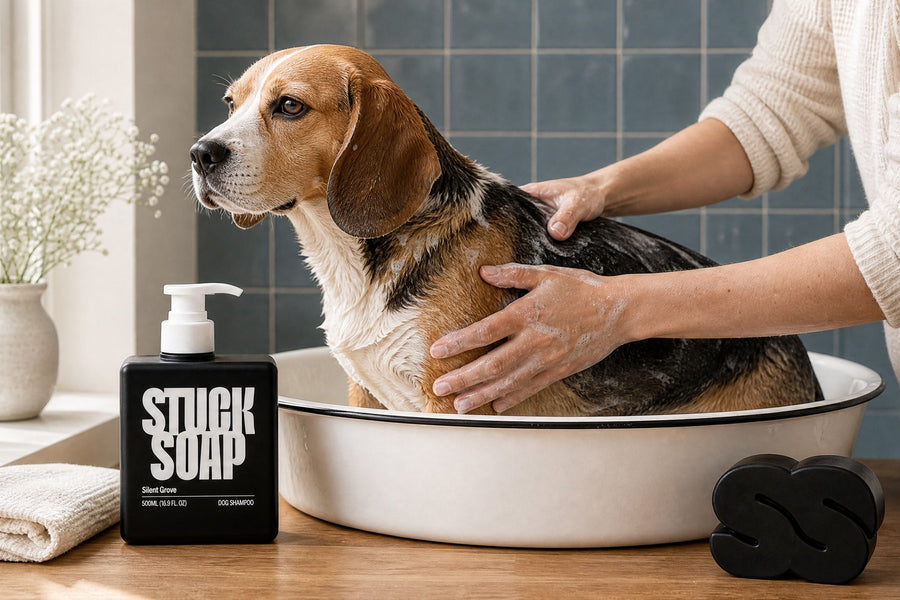
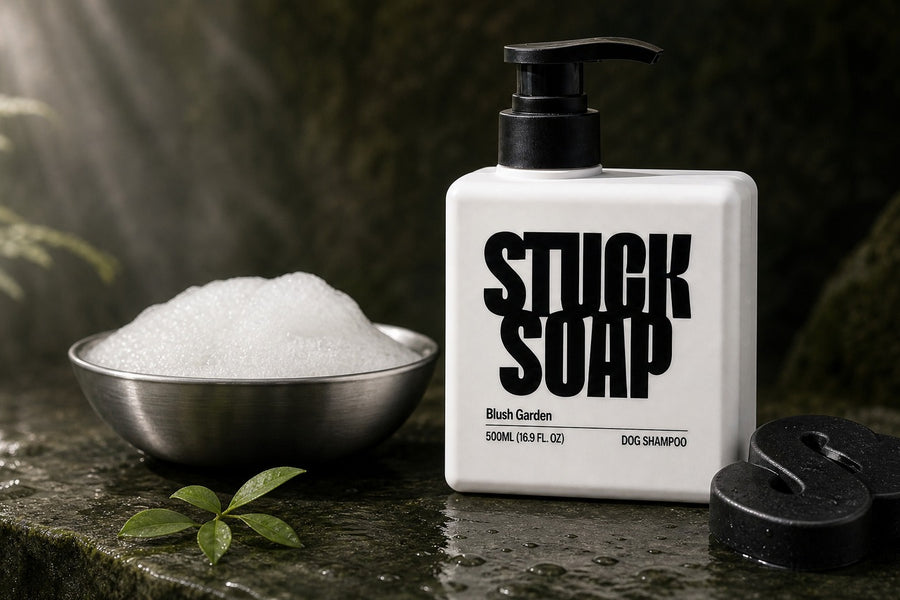
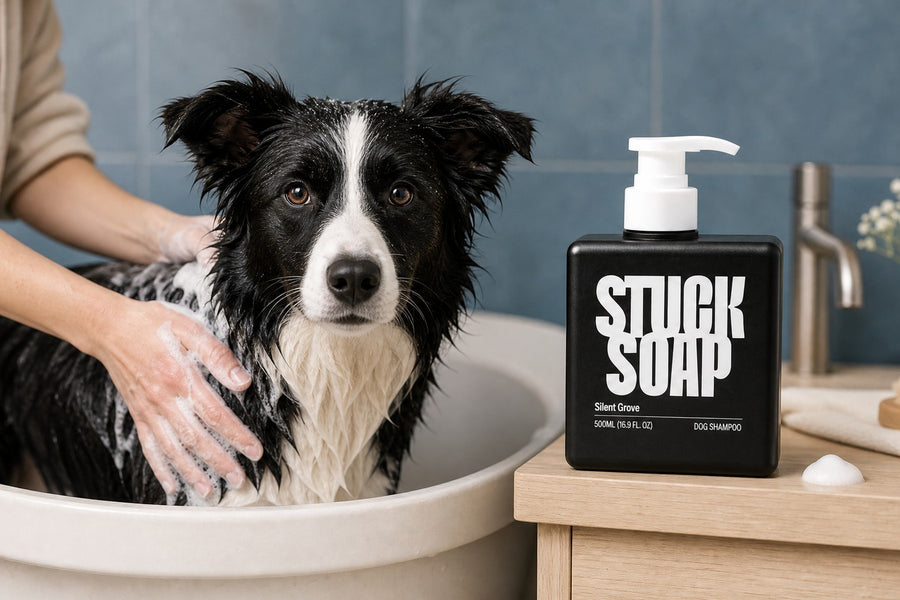
A note on product, since frequency is the whole strategy here: washing more often only works if the shampoo supports the skin barrier rather than stripping it. STUCK SOAP is a non-medicated K-Beauty grooming line built around Green Tea, Camellia Oil, and Centella Asiatica, pH-balanced for dog skin, vegan, and formulated for sebum control and barrier support. It is a cosmetic grooming product, not a treatment for allergy. It helps you physically remove what is sitting on the coat, and it is concentrated enough that a weekly September schedule does not turn into a supply problem. Available as a 500ml liquid shampoo or a zero-waste bar, in Silent Grove or Blush Garden.
Frequently Asked Questions
When does ragweed season start and end for dogs?
Ragweed pollen usually appears in mid-August, climbs through September, and drops off after the first hard frost, often in October or November depending on your region. Dogs react to the same pollen people do. Southern regions can see a longer tail, so track local counts rather than assuming a fixed end date.
How often should I bathe my dog during ragweed season?
Many owners move from a bath every three to four weeks to one every seven to ten days once counts climb, then add quick rinses of paws and belly after walks. Start the shift before symptoms appear. If skin turns dry or flaky, stretch the interval and ask your veterinarian.
Can bathing alone control ragweed allergies in dogs?
No. Bathing physically removes pollen sitting on the coat and skin, which lowers how much allergen stays in contact all day. It does not treat an allergic immune response. Dogs with confirmed atopic dermatitis need a veterinary plan, and grooming works alongside that plan rather than replacing any part of it.
What are the early signs of ragweed allergies in dogs?
Watch for paw licking, face rubbing on carpet, ear scratching, armpit and groin redness, and a dog who wakes to chew at himself. Signs often start subtle and build over a week or two. Late summer timing that repeats every year is a useful clue worth reporting to your vet.
Is wiping down enough, or does my dog need a full bath?
Wipe-downs and paw rinses handle daily load between baths and are worth doing after every walk during peak weeks. They do not reach the belly, armpits, and undercoat the way a full lather and rinse does. Use both: frequent quick cleanups, plus a scheduled full bath on your calendar.
Will frequent bathing dry out my dog's skin?
It can, if the product strips sebum or the coat never fully rinses. A pH-appropriate, barrier-supporting shampoo and a thorough rinse make a weekly schedule far more tolerable. Watch for flaking, dullness, and static. Those signal you should lengthen the gap or change the product, not push harder.
When should I stop the ragweed bathing schedule?
After the first hard frost kills local ragweed, counts fall fast and you can ease back toward your normal interval over two or three weeks. Do not stop abruptly. Indoor heating season brings its own dryness, so many dogs do better with a slower taper than a hard cutoff.
Sources
- Asthma and Allergy Foundation of America, Pollen Allergy, for ragweed season timing and pollen behavior.
- Pollen.com, for regional daily and forecast pollen counts.
- American Kennel Club, Dog Allergies: Symptoms and Treatment, for canine allergy signs and when to involve a veterinarian.
- Merck Veterinary Manual, Dog Owners, for atopic dermatitis background and diagnostic pathway.
- American Veterinary Medical Association, for general pet owner health guidance.
- PubMed, for veterinary dermatology literature on bathing and surface allergen removal.
Seasonal dates in this article are regional averages. Confirm your local first-frost date and pollen counts before locking a schedule.
Build Your Dog's Fall Calendar This Week
Ragweed is already releasing. Set your bath dates through October, take your baseline photos today, and pick a shampoo that can handle a higher frequency without wrecking the skin barrier. Explore the STUCK SOAP liquid shampoo and zero-waste bar at stucksoap.com.