


What to check when bathing your dog comes down to six things you can observe with your hands and your nose: lumps and bumps, red or irritated patches of skin, ear odor, paw pads and the spaces between the toes, the skin around the rear and tail base, and any change in coat texture. None of those checks is a diagnosis. They are observations you write down and hand to your veterinarian, who does the interpreting.
Most owners already touch their dog more thoroughly during one bath than during an entire week of couch scratches. The coat is flat, the skin is visible, and both hands are moving slowly over every square inch of the body. That is a wasted opportunity if the only thing you are thinking about is getting the shampoo out before the dog escapes.
Why the Tub Is the Best Exam Room in the House
A bath-time body scan is a short, structured pass over your dog's body during a normal bath, done for the purpose of noticing changes rather than treating anything. It adds maybe two minutes to a wash you were already doing.
Wet fur is the reason it works. A dry double coat hides almost everything: a pea-sized bump disappears under a Sheltie's ruff, and mild redness on a Frenchie's belly reads as normal pink skin until you compare it to last month. Water flattens the coat against the body, so the outline of the skin becomes legible. Lather adds a thin layer of glide, which lets your fingertips register small differences in surface and firmness that dry hands skate right over.
The other advantage is rhythm. Veterinary wellness exams happen once or twice a year. Baths happen every two to six weeks for most dogs. Anything that shows up in between has weeks or months to develop unnoticed, and the American Kennel Club's health guidance for owners consistently points back to the same theme: owners who notice early changes give their veterinary team more to work with.
Before You Start: Set Up So the Scan Is Actually Useful
A scan done in a chaotic bathroom produces bad data. Five minutes of setup fixes that, and it also makes the bath itself calmer. If bath day tends to end with a soaked hallway, our guide on how to bathe a dog without making a mess covers the logistics side.
- Do the nose check first, while the dog is dry. Ear odor and paw odor are far easier to assess before water and shampoo enter the picture. Sniff, then start the water.
- Get the light right. Bathroom overheads cast shadows into exactly the places you want to see. A clip-on lamp or a phone flashlight propped nearby costs nothing and changes what you can spot on skin.
- Put down traction. A rubber mat keeps the dog still. A dog who is scrambling will flinch at everything, which makes it impossible to tell a real pain response from a slip.
- Wet the coat completely before lathering. Half-wet fur hides skin. Take the extra thirty seconds.
- Work in one fixed order every time. Nose to tail, top to bottom, left side then right. Consistency is what turns a random touch into a comparison against last month.
- Keep your phone within reach, in a bag. You will forget the location of a bump by the time the towel comes out. Everyone does.
What to Check When Bathing Your Dog: The Six-Point Scan
Work through these in order. Describe, do not interpret.
1. Lumps and Bumps
Lay your hand flat and move in slow circles with the pads of your fingers, not the tips. Cover the neck, shoulders, chest, along both sides of the spine, the flanks, the belly, the armpits, the groin, and down each leg. Soapy hands glide, so you will feel far more than you expect.
What you record is physical description only: where it is on the body, roughly how big (a lentil, a pea, a grape, a marble), whether it feels soft or firm, whether it slides freely under the skin or seems anchored to the tissue beneath, whether the skin over it is broken or discolored, and whether your dog reacts when you press. Do not try to work out what it is. Size and texture cannot tell you that, and a confident guess at home is the most common reason an appointment gets postponed.
2. Redness and Irritated Patches
With the coat wet and parted, scan the thin-skinned areas where irritation tends to surface first: belly, inner thighs, armpits, the folds around the muzzle and neck on wrinkled breeds, and the underside of the tail. Look for color that differs from the surrounding skin, patches that look raised or bumpy, areas where hair is thinner than it was, and any spot the dog keeps turning to lick.
Note the shape and the borders. A single defined patch, a scattering of small spots, and a broad diffuse blush are three different observations, and your veterinarian will want to know which one you saw. Timing matters too. Skin that reacts within a day of a bath is a different story from skin that has looked irritated for three weeks, and we walk through that distinction in hives the day after bath day. Baseline skin varies enormously between individual dogs, which is why sorting dogs by skin type rather than coat type is a more useful mental model than breed alone.
3. Ear Odor
Done before the bath, dry. Lift the flap, hold it open for a second, and take a normal breath through your nose. You are answering one question: does this smell different from the last time I checked?
Record the answer as a comparison, not a description of a condition. Stronger than last month. Same as always. Noticeable from a foot away rather than only up close. Pair it with what you can see at the ear opening (color, moisture, any debris) and with behavior (head shaking, scratching, tilting, pulling away when you lift the flap). Those three observations together are genuinely useful to a vet. A guess about the cause is not. Keep water out of the ear canal during the bath itself.
4. Paw Pads and Between the Toes
Paws come last in most baths and get the least attention, which is backwards. Lift each foot, spread the toes apart with your fingers, and look into every web space. Then run a thumb across each pad.
You are checking pad texture (smooth, rough, cracked, unusually thick), the web spaces (redness, moisture, matting, anything lodged between the toes), the nails and the skin around each nail bed, and whether the dog resists having a particular foot handled. Foot odor deserves its own note. Feet have a characteristic smell for reasons we unpack in why your dog's paws smell like corn chips, so the thing worth logging is a change in that smell, not the smell itself.
5. Around the Rear and Tail Base
Nobody enjoys this one. Do it anyway, and do it briefly. With the coat wet, look at the skin around the anus and along the top of the tail base, and note redness, swelling, thinning hair, matting, or anything stuck in the fur. Behavior counts as an observation here: scooting on the carpet, sudden intense licking or chewing at the tail base, or a dog who spins to look at you when you wash the area.
Describe location and behavior, then stop. This is one of the most common areas for owners to jump to conclusions, and it is also one of the easiest for a veterinarian to assess in about ninety seconds.
6. Changes in Coat Texture
The last check happens as you rinse and again as you towel. Run your hands through the coat and pay attention to how it feels rather than how it looks. Brittle where it used to be soft. Greasy at the base of the tail. Dull and dry across the back. Thinner in one specific area. Shedding noticeably heavier than usual for the season.
Coat texture drifts slowly, which is why bath-to-bath comparison beats memory. Rule out the obvious grooming explanations first: leftover product weighs a coat down and dulls it, so confirm you are actually rinsing all the way out. Odor is part of texture reporting too, and the location of a smell carries more information than its intensity, which is the whole premise of the dog odor map.
The Six-Point Reference Table
| Check | What you are feeling or smelling for | What to write down | When to call the vet |
|---|---|---|---|
| Lumps and bumps | Anything raised, firm, or new under flat, soapy hands | Location, size compared to a food item, soft or firm, movable or fixed, date first noticed | New, growing, hard, fixed in place, ulcerated, bleeding, or painful |
| Redness and irritated patches | Color, texture, and hair coverage on thin-skinned areas | Location, size, shape and borders, how long it has been there, licking behavior | Spreading, open or oozing, present more than a few days, or paired with constant licking |
| Ear odor | Whether the smell has changed since the last bath | Stronger or same, one ear or both, visible debris, head shaking or scratching | A clear change in smell, visible discharge, head tilt, or pain when the flap is lifted |
| Paw pads and between toes | Pad texture, web spaces, nail beds, foot odor | Which foot, which toe space, cracked or rough pads, redness, resistance to handling | Limping, bleeding, a cracked pad, swelling around a nail, or refusal to bear weight |
| Rear and tail base | Skin condition and behavior around the anus and tail base | Redness, swelling, matting, scooting, chewing or licking at the area | Scooting that repeats, swelling, an open area, or obvious discomfort when touched |
| Coat texture | Softness, oiliness, brittleness, density, seasonal shedding | Which region changed, how it feels now versus last bath, any thinning | Patchy hair loss, a bald spot, or texture change alongside irritated skin |
Write It Down: The Two-Minute Bath Log
Observation without a record is just a vague feeling three weeks later. The log does not need to be elaborate. A note on your phone titled with your dog's name, one dated entry per bath, and four or five lines is enough.
Photograph anything visible, and put something in frame for scale: a coin, a fingertip, the cap of a shampoo bottle. Shoot from the same angle and roughly the same distance each time. A sequence of four dated photos of the same spot is one of the most useful things you can hand a veterinarian, because it turns "I think it got bigger" into evidence.
Seasonal context belongs in the log too. Skin that flares every September alongside pollen counts tells a different story than skin that flares at random, and building a bathing calendar around ragweed season is easier when you have a year of notes to look back on.
When to Call the Vet Sooner Rather Than Later
The default posture is generous: when in doubt, call. Veterinary teams would far rather take a two-minute phone call about a lump that turns out to be nothing than see the same lump six months later. Nothing in a bath-time scan is a substitute for a professional exam, and reference libraries maintained by the Merck Veterinary Manual and the Cornell Riney Canine Health Center are for context, not for self-assessment.
Some findings deserve a call in days rather than at the next checkup:
- A lump that is new since the last bath, is growing, feels hard, is fixed in place, is ulcerated or bleeding, or hurts when touched
- Any limp, or a dog who will not put weight on a foot
- Bleeding anywhere, from any cause you cannot explain
- A flinch, yelp, or head whip toward your hand at the same spot more than once
- Skin that is open, weeping, or spreading rather than holding steady
- An ear smell that has clearly changed, or a head tilt
- Patchy hair loss or a bald area that was not there last time
- Any finding paired with a change in appetite, energy, thirst, or bathroom habits
What to Check When Bathing Your Dog on a Rushed Day
Not every bath allows for the full pass. On a compressed schedule, do three things. Sniff both ears before the water goes on. Run two flat, soapy hands from the neck to the tail and down each leg once, slowly. Lift all four feet and look between the toes. That is under ninety seconds, and it covers the checks most likely to surface something that matters.
Then log one line, even a bad one. "Nothing new, left ear same as last time" is a real data point. Six of those in a row make the seventh entry meaningful.
The Wash Itself Should Not Get in the Way
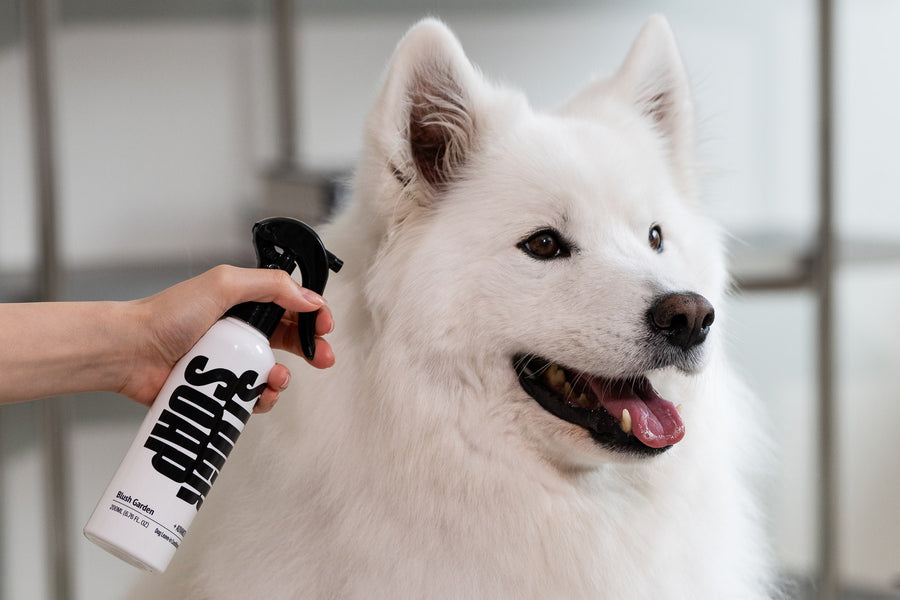
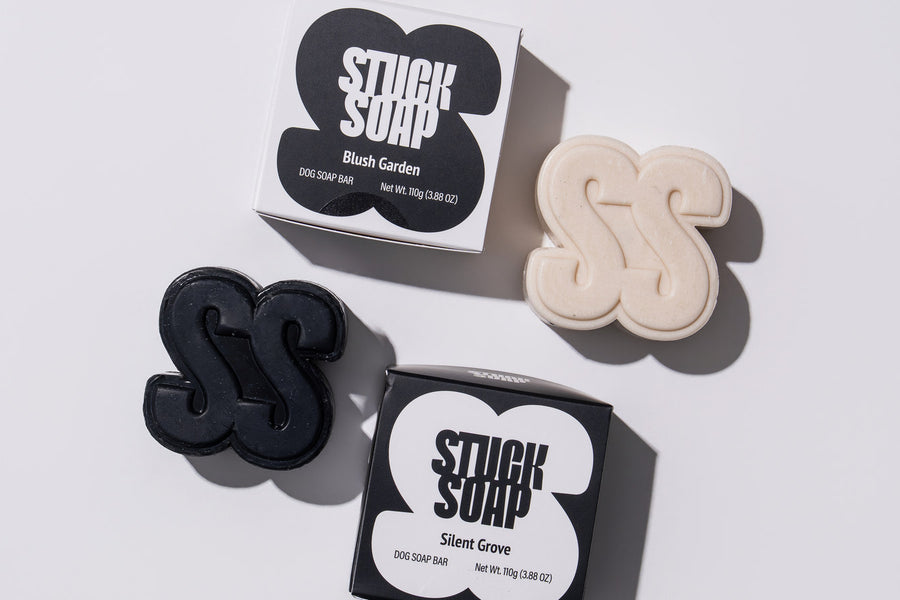
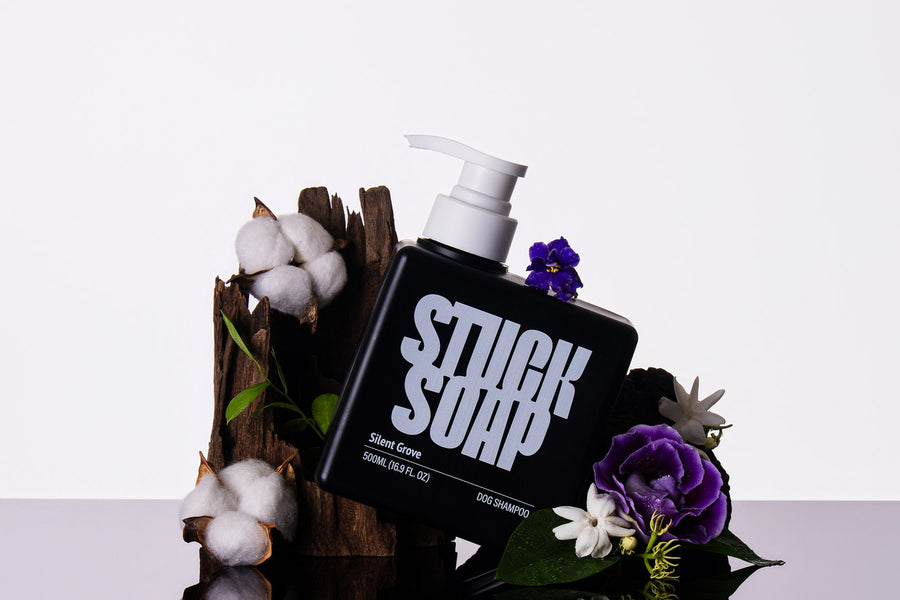
A scan works best on a dog who is comfortable enough to stand still, which makes the wash part of the setup rather than a separate errand. STUCK SOAP builds its Liquid Shampoo and Shampoo Bar around K-Beauty formulation habits: vegan, pH-balanced for dog skin, with Green Tea, Camellia Oil, and Centella Asiatica, and a fine-bubble lather that spreads easily so one pump covers a lot of coat. The high-concentrate formula rinses clean, which keeps residue from muddying what you see at the next bath, and the zero-waste bar covers the same ground without the bottle. Silent Grove is the earthy scent, Blush Garden the floral one. It is a cosmetic grooming product, not a treatment: it does not diagnose, treat, cure, or prevent anything you find during a scan. Findings go to the vet, every time.
Frequently Asked Questions
What should I check when I bathe my dog?
Run through six areas: lumps or bumps under the coat, red or irritated patches of skin, ear odor, paw pads and the spaces between toes, the skin around the rear and tail base, and any change in coat texture. Note what you find, then ask your veterinarian to interpret it.
How often should I do a bath-time body scan?
Every bath. For most house dogs that lands somewhere between every two weeks and every six weeks, depending on coat, skin type, and lifestyle. The value comes from repetition: a lump you have felt at four straight baths reads very differently from one that appeared this week.
Can I tell what a lump is by feeling it?
No. Size and texture cannot identify a mass, and guessing usually delays the appointment that would actually answer the question. Your job is description, not diagnosis. Record where it sits, roughly how large it is, whether it slides under the skin, and the date you first noticed it.
Should I be smelling my dog's ears?
A quick sniff before the bath is a reasonable habit. You are noting whether the smell has changed since last time, not deciding what it means. Pair the smell with what you see at the ear opening and whether your dog pulls away, then bring all three observations to your vet.
Does my dog's shampoo affect what I find during the scan?
It can affect comfort and how the skin looks afterward, so use a gentle, pH-appropriate dog shampoo and rinse thoroughly. Residue left in the coat can make skin look flaky or dull at the next bath. Shampoo choice is grooming, though, not treatment for anything you find.
What should I do if my dog flinches when I touch a spot?
Stop pressing that area and finish the bath gently. A flinch, a yelp, or a head whip toward your hand is worth a call to the veterinarian, especially if it repeats in the same spot. Write down the location and what you were doing when it happened.
Is a bath-time body scan a substitute for a vet exam?
No. It is a way to notice changes between appointments and bring better information to them. Annual or twice-yearly wellness exams catch things hands in a tub cannot, including anything internal. Think of the scan as an early-warning habit that makes your veterinarian's job easier, not smaller.
Sources
- American Kennel Club, Expert Advice: Health. akc.org/expert-advice/health/
- Merck Veterinary Manual, Dog Owners section. merckvetmanual.com/dog-owners
- Cornell University College of Veterinary Medicine, Riney Canine Health Center. vet.cornell.edu
This article is general grooming and observation guidance for pet owners. It is not veterinary advice and is not intended to diagnose or treat any condition. Contact your veterinarian about anything you find.
Make Bath Day Worth the Two Extra Minutes
A calm, well-rinsed bath is what makes the body scan possible in the first place. Browse the STUCK SOAP Liquid Shampoo and Shampoo Bar in Silent Grove and Blush Garden at stucksoap.com, then start your log at the next wash.