

Brush your dog before the bath, every time, and then give the coat a lighter finishing brush after it's dry or nearly dry. The first brush does the heavy lifting by clearing loose hair and tangles; the second tidies the coat and catches whatever the wash shook loose.
If you've ever typed "brush dog before or after bath" into a search bar while a muddy dog waited by the tub, that's the answer in two sentences. The details depend on the season and the coat. In November, with many double-coated dogs still dropping undercoat, the order matters more than usual.
Brush Before or After a Bath? The Short Answer
Think of the two brushing sessions as different jobs, not as a choice between them.
- Before the bath: a working brush. It removes dead hair, opens tangles, and gets the coat ready for water and shampoo.
- After the bath: a finishing brush. It lays the coat in its natural direction, lifts out hair the wash loosened, and checks for anything you missed.
If you only have time for one, make it the pre-bath brush. The American Kennel Club is direct about this in its seasonal grooming advice: "Before giving a dog a bath, you should ensure they were recently brushed to remove dead hair and mats." Skip the after-bath brush and the coat is a little less polished. Skip the before-bath brush and it can end up worse off.
What Brushing Before a Bath Actually Does
It clears loose undercoat out of the way
Shed hair doesn't always fall out on its own. In thick coats it gets caught in the living hair around it, packing down into a dense layer close to the skin. We covered this in detail in our piece on why dogs smell more in fall: that trapped undercoat holds moisture, skin oils, and odor, and it slows drying after every bath or rainy walk. Brushing it out first means you're washing the coat your dog is actually wearing, not a layer of hair that's already on its way out.
It opens tangles while they're still small
A tangle is a few hairs twisted together. A mat is a tangle that has grown, tightened, and bound to the hair around it. Dry tangles usually brush out with patience. Wet ones don't.
It lets water and shampoo reach the skin
A brushed coat lets water soak down to the skin evenly, lets lather spread instead of sitting on top, and lets the rinse carry everything back out. In a dense coat that hasn't been brushed, shampoo can get trapped in packed undercoat, and residue left near the skin is one of the more common reasons a "clean" dog still feels tacky. Our guide on getting shampoo through a double coat walks through the wash itself; the pre-bath brush is what makes that step work.
What Brushing After a Bath Is For
The finishing brush
A bath loosens more hair than you'd guess. Warm water and towel drying free strands that were hanging on. The after-bath brush collects that hair before it ends up on the couch, and it sets the coat in its natural lay so it dries smooth instead of kinked or flattened.
Wet, damp, or dry: when to start
Timing matters more here than with the pre-bath session. A dripping coat is at its most fragile; a towel-blotted, damp coat handles a wide-tooth comb or soft brush much better. For many coats, the cleanest result comes from brushing once fully dry, or brushing in sections while you blow-dry on a cool or low-heat setting. If you need a refresher on that part, see our complete guide to drying your dog after a bath.
Why Wet Hair and Mats Don't Mix
Wet hair stretches and snaps more easily
Hair absorbs water and swells. While it's saturated, each strand is softer, stretchier, and quicker to break under tension. Drag a slicker brush hard through a soaking coat and you can snap strands, frizz the ends, and pull on the skin underneath. It also teaches your dog that brushing hurts.
Water tightens mats
This is the bigger problem. When a mat gets wet, the hairs inside it swell and the knot pulls closer together. As it dries, it shrinks down even tighter, sometimes snug against the skin. The AKC puts it plainly: "If a dog is bathed with mats, it only makes their hair tighter and harder to brush out."
When to stop and call a professional
Some mats aren't a home job. If you find a mat that's pulled tight against the skin, stop brushing that area and hold off on the bath. Please don't try to cut it out with scissors. The Merck Veterinary Manual warns against it, noting that "it's easy to accidentally cut the skin." A professional groomer can clip it out safely with the right tools. And if the skin under or around a mat looks red, broken, scabbed, or sore, that's a reason to see your veterinarian before any more grooming.
Shedding Season: Why Brushing Before a Bath Comes First
Fall is a coat changeover
Many double-coated breeds go through two big sheds a year, one in spring and one in fall. The fall turnover looks less dramatic than the spring "blowout," but plenty of dogs are still releasing undercoat well into November. Our fall shedding guide explains the timing in more depth.
Why the order matters most right now
Bathe a heavy shedder without brushing first and three things tend to happen. The water turns loose undercoat into damp clumps that cling to the living coat. Shampoo struggles to get through to the skin. And drying takes far longer, because a packed undercoat holds water like a sponge. Brush first and the bath goes faster, the rinse is cleaner, and the coat dries more evenly.
A shoulder-season rhythm
For most double-coated dogs in October and November, a thorough brushing session the day before the bath, a quick pass right before it, and a finishing brush once dry is a realistic routine. Between baths, brushing a few times a week keeps the shed under control. Our article on how often you should brush your dog breaks down frequency by coat, and the double coat grooming routine covers tool choice for the undercoat.
Brush Before or After a Bath? Coat-Type Exceptions
The basic rule holds for nearly every dog, but the details shift with coat type. If you're not sure which category your dog falls into, our dog coat types guide can help you sort it out.
| Coat type | Before the bath | After the bath | Notes |
|---|---|---|---|
| Double coat (Husky, Golden Retriever, Corgi, Shepherd) | Essential. Slicker plus undercoat rake, down to the skin. | Yes, once fully dry. Expect another round of loose undercoat. | Dry all the way to the skin; damp undercoat can stay damp for hours. |
| Long silky (Shih Tzu, Yorkie, Maltese) | Essential. Line-brush in sections, then check with a comb. | Yes, while blow-drying or once dry, in small sections. | Tangles fast behind ears and under legs. See our long-haired routine. |
| Curly (Poodle, Doodle, Bichon) | Essential. Brush and comb out completely; any missed knot can felt in the bath. | Yes, brush while drying so curls don't tighten into new tangles. | Curly coats mat close to the skin; tight mats go to a groomer. See our curly coat guide. |
| Wire (Schnauzer, many Terriers) | Recommended. Slicker and comb through furnishings (beard, legs). | Light comb once dry. | Bathing softens wire texture; many owners bathe these coats less often. |
| Short smooth (Beagle, Boxer, Lab mixes) | Quick pass with a rubber curry or mitt to loosen dead hair. | Optional quick polish once dry. | Rarely mats, but still sheds; the curry keeps hair out of the drain. |
| Any coat with tight mats | Don't force it. Stop and get help. | Not applicable until mats are removed. | Book a groomer; see a vet if skin looks red, broken, or sore. |
How to read the table
"Essential" means no bath until the brush passes from skin to tip without catching. "Recommended" means it helps, but a missed tangle rarely becomes serious. The last row overrides everything above it.
A Bath-Day Brushing Routine You Can Actually Follow
Step by step
- Brush dry, the day before or an hour before. Work in sections from the skin outward; check behind the ears, armpits, thighs, and tail.
- Check with a comb. If a fine or medium comb catches, go back over that spot with the brush. If it catches against the skin and won't release, leave it for a groomer.
- Bathe. Wet thoroughly, lather, and rinse until the water runs clear.
- Blot, don't rub. Scrubbing in circles creates new tangles in long or curly hair.
- Finish brush. Once the coat is damp-dry, or while you blow-dry, brush in small sections with a soft brush or wide-tooth comb.
- Final check. When fully dry, comb through once more and look at the skin.
Where STUCK SOAP fits
For the wash itself, our STUCK SOAP Liquid Shampoo is a pH-balanced, vegan formula built around Green Tea, Camellia Oil, and Centella Asiatica. It's concentrated, so one pump is usually enough, and the fine-bubble lather spreads easily through a brushed-out coat. Prefer zero waste? The Shampoo Bar does the same job without the bottle, in Silent Grove or Blush Garden.
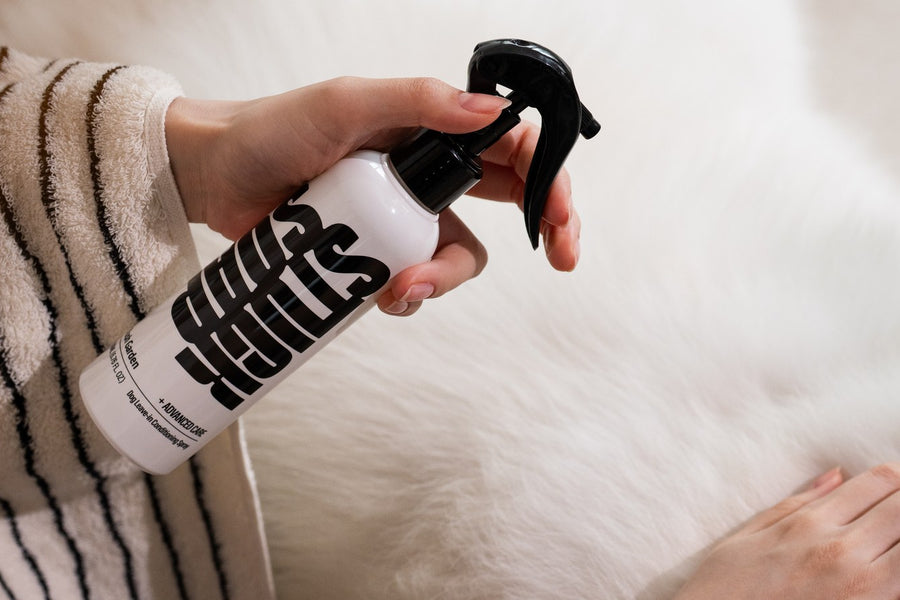
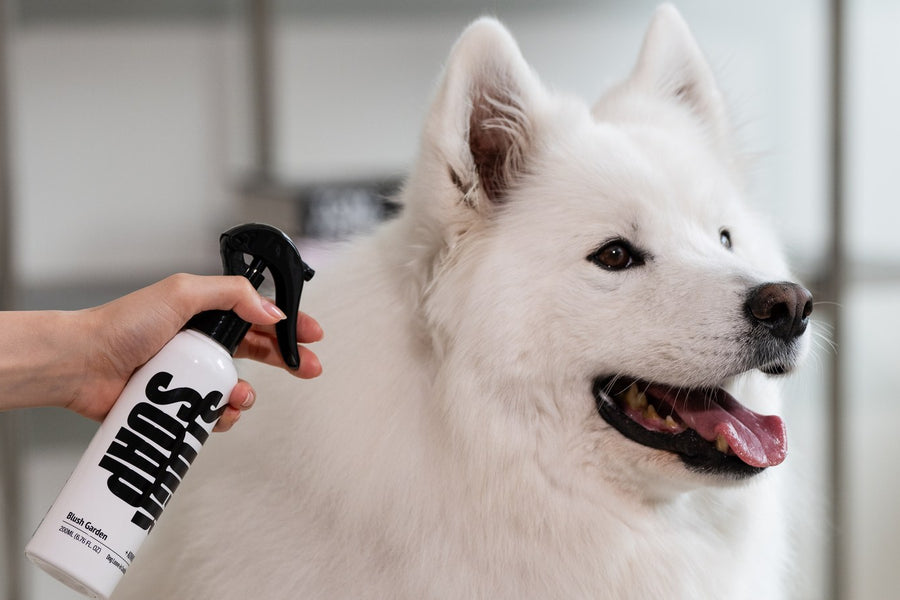
For the finishing brush, our Leave-In Conditioning Spray is a no-rinse, lightweight mist you can use on a damp or dry coat. A light spritz before the after-bath brush gives the bristles a bit more slip, so they glide instead of drag. It's formulated with three patented actives (Mung Bean Sprout Extract, Tannin Complex HR, and ODOR-BYE), which we chose for coat feel and freshness between baths. It's a grooming aid, not a mat remover. Our guide on how to use leave-in conditioner on dogs covers how much to use by coat type.
Practical takeaways
- Always brush before the bath; brush again after if you can.
- Never bathe over mats. Water tightens them.
- Brush damp or dry hair, not dripping wet hair.
- Tight mats, or red or broken skin, mean it's time for a groomer or a vet.
FAQ
Should you brush a dog before or after a bath?
Brush before the bath, every time, and brush again lightly after. The pre-bath brush clears loose hair and tangles so shampoo and water can reach the skin and rinse out cleanly. The post-bath brush is a finishing pass that lays the coat flat and catches any hair the wash released.
Why shouldn't you bathe a matted dog?
Water soaks into a mat, swells the hair, and pulls the knot tighter as it dries, which makes it harder to work out and more uncomfortable for your dog. The AKC notes that bathing a matted dog makes the hair tighter and harder to brush. Clear tangles first, or call a groomer for tight mats.
Is it bad to brush a dog's wet hair?
Wet hair is more elastic and easier to snap, so hard brushing on a soaking coat can break strands and tug the skin. Wait until the coat is towel-damp, use a wide-tooth comb or soft brush, and work in small sections. Many groomers brush while blow-drying, a separate technique where airflow lifts and separates the hair.
How long before a bath should I brush my dog?
Right before is ideal: same day, ideally within an hour or so of the bath, so loose hair doesn't resettle into the coat. For heavy shedders in spring or fall, a thorough session the day before plus a quick pass right before the bath keeps the job manageable for you and your dog.
Do short-haired dogs need brushing before a bath?
Yes, though it takes only a few minutes. A rubber curry brush or grooming mitt loosens dead hair and dander so it rinses away instead of clinging to the wet coat and your towels. Short smooth coats rarely mat, so the after-bath brush is mostly a quick polish once dry.
What should I do if I find a mat close to the skin?
Stop brushing that spot and hold off on the bath. Don't try to cut it out with scissors; the Merck Veterinary Manual warns it's easy to cut the skin. Book a professional groomer to clip it safely, and see a veterinarian if the skin underneath looks red, broken, or sore.
Can a leave-in spray help with after-bath brushing?
A light mist of a no-rinse leave-in conditioner on a damp or dry coat can give the brush more slip, so it glides through the finishing pass with less drag. Spray from a short distance, work it through with your fingers, then brush in sections. It is a grooming aid, not a mat remover.
Sources
- American Kennel Club. "Spring Grooming Tips to Get Your Dog Ready for Warmer Weather." akc.org
- American Kennel Club. "How to Groom Your Dog at Home: Easy Tips for Everyday Care." akc.org
- Merck Veterinary Manual, Dog Owners edition. "Routine Health Care of Dogs." merckvetmanual.com
Bath day, simplified. Brush first, wash with a shampoo made for dog skin, and finish with a light leave-in mist. Find the Liquid Shampoo, Shampoo Bar, and Leave-In Conditioning Spray in Silent Grove and Blush Garden at stucksoap.com.