

A good short haired dog grooming routine is simple: brush a few times a week, bathe with a small amount of gentle, low-residue shampoo, rinse longer than you think you need to, and finish with a light, no-rinse conditioning step. Short coats need less product, not less care, because the skin sits right under a thin layer of hair and anything you leave behind lands directly on it.
That second half is where owners of Beagles, Boston Terriers, and French Bulldogs get caught out. The coat looks tidy, dries in twenty minutes, and never mats, so it feels like the "easy" coat. Then come the flakes on a dark blanket and the dog that scratches the day after every bath. That usually doesn't mean you groomed too little. It means the routine was built for a different coat.
This is the first coat-specific routine in our series. If you haven't confirmed what your dog has, start with our dog coat types guide and its ten-second touch test, then come back here.
Short-Haired Dog Grooming Routine: The Short Answer
A short-haired dog grooming routine is a care plan for smooth, close-lying coats under about an inch long. It focuses on regular brushing to clear loose hair and spread natural oils, occasional baths with a measured amount of mild shampoo, a thorough rinse, and a lightweight finishing step that tidies the coat without leaving film on the skin.
In our own shorthand, it fits on a sticky note: Short coat = Shampoo + Conditioning Spray. One cleanse that rinses out clean, one light step that keeps the coat comfortable between baths. The rest of this guide is about doing those two things well.
Why "Short Coat, Low Maintenance" Misses the Point
Short coats rarely tangle and a towel does most of the drying. But lower effort is not the same as no routine. The American Kennel Club makes the point directly on bath frequency: "it's not as simple as the shorter the hair, the less bathing required." (AKC)
Short-haired dogs also shed, often steadily all year, and the hairs still in the coat collect dust and skin oil. The AKC's home grooming advice suggests brushing "every other day (even short-haired breeds)" and notes that bristle brushes suit short-haired breeds. (AKC)
So the real shift is not doing less. It's doing smaller, lighter versions of each step.
What Makes Short Coats Different: Skin Close to the Surface
On a long or double coat, a lot of hair sits between the outside world and the skin. Whatever you apply gets spread through that hair, and some of it never reaches the skin at all. On a short coat there is very little buffer. Product goes on, and within seconds it's on the skin.
- Residue has nowhere to hide. Shampoo left on a short coat is shampoo left on the skin. The AKC notes that "Residual shampoo left on a dog can cause dryness and flakiness," and that rinsing should take longer than shampooing. (AKC)
- Natural oils matter more. The Merck Veterinary Manual explains that sebum, the oily substance from the skin's oil glands, "is important for keeping the skin soft, moist, and pliable." (Merck Veterinary Manual) A heavy-handed wash on a short coat can strip more of that away than you intended.
Here is how that plays out across coat types:
| Coat type | Hair between product and skin | Where leftover product ends up | Dosing approach |
|---|---|---|---|
| Short (smooth) | Very little | Directly on the skin | Smallest amount, well diluted, longest rinse relative to wash time |
| Medium | Moderate | Mid-shaft and at the skin | Moderate amount, worked down with fingertips |
| Long single | A lot, no undercoat | Along the length, near friction points | More product for length, careful rinse behind ears and legs |
| Double | Dense undercoat layer | Trapped in the undercoat near the skin | Brush out first, more water and lather to reach the skin |
Coat type tells you how to apply and rinse. It doesn't tell you which formula suits your dog's skin; for that, see our guide to dog skin types.
The Short Coat Routine: Shampoo + Conditioning Spray
Here is the full short haired dog grooming routine, split into weekly care and bath day.
Weekly: brush and wipe
- Brush on a dry coat, several times a week. Use a soft bristle brush or rubber curry mitt and work in the direction the hair grows. Two or three minutes is plenty.
- Finish with a damp cloth. A quick wipe picks up the loose hairs the brush lifted.
- Spot clean instead of bathing. Muddy paws don't need a full bath. Our between-bath care routine covers quick fixes.
Bath day: a light, low-residue cleanse
- Brush first. Less loose hair means less of it stuck to wet skin.
- Wet thoroughly with lukewarm water. On a short coat this takes seconds. Keep water out of ears and eyes.
- Use less shampoo than you think. Lather a small amount in your hands or a cup of water first, then spread it over the body. Our shampoo dosage chart gives amounts by size.
- Massage, don't scrub. Fingertips in small circles, with the grain. A short contact time is enough; see how long to leave shampoo on a dog.
- Rinse, then rinse again. Go until the coat feels clean and slightly squeaky, not slick, paying attention to armpits, groin, and the collar line. Our guide to checking shampoo residue on a dog has a simple touch test.
- Towel dry firmly. Most short coats are nearly dry after a good toweling.
After the bath and before brushing: a light conditioning step
This is the "Conditioning Spray" half of the equation. A no-rinse spray on a short coat should disappear into the hair, not sit on top of it.
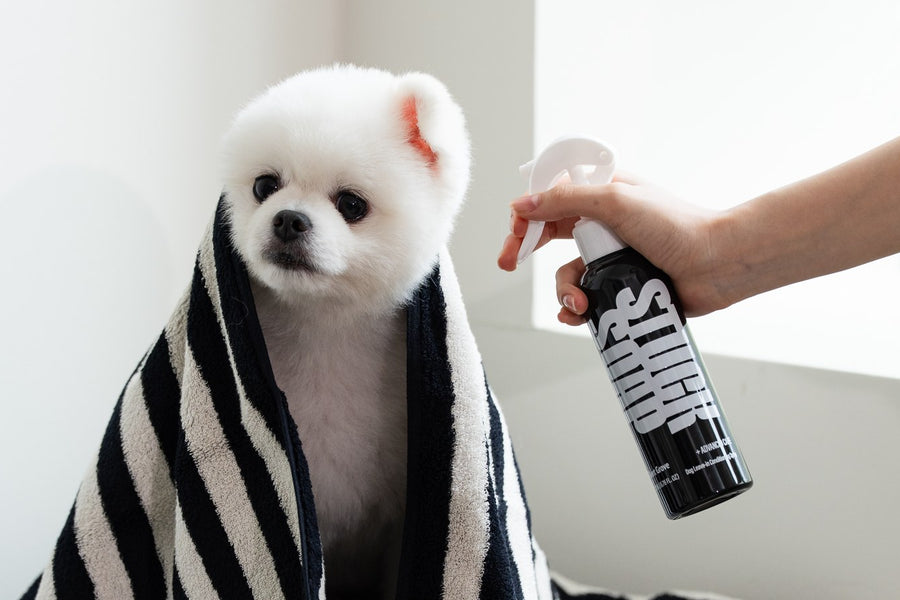
- After the bath: once the coat is towel-dried, mist lightly over the back, sides, and chest from about a hand's length away, then smooth it in with your palm.
- Between baths: mist lightly before a brushing session, then brush through. This is the coat-tidying step that keeps things neat without another wash.
- Keep it on the body. Avoid the face, eyes, nose, and ears. If you're unsure how your dog's skin will respond to a new product, run a patch test before bath day.
One mist, not a soak. On a short coat, more spray simply means more on the skin.
Breed Notes: Beagle, Boston Terrier, French Bulldog
Beagle
Beagles have a dense, close coat and spend a lot of time nose-down outdoors. They come home dusty far more often than they need a full bath, so lean on brushing and spot cleaning and save the shampoo for when the whole dog needs it. Check those long ears weekly and follow your vet's guidance on ear cleaning.
Boston Terrier
The Boston's fine, glossy coat shows dullness and flakes quickly, especially on the black areas. That makes it a good early warning system for residue. If you see white flecks the day after a bath, try less shampoo and a longer rinse before changing anything else.
French Bulldog
Frenchies pair a short coat with facial folds and a flat face. Keep shampoo and spray well away from the face. For folds, the AKC advises to "Keep facial skin folds clean in breeds with folds." (AKC) A soft, damp cloth followed by gentle drying inside the fold is usually enough for routine care. If a fold looks red, smells, or seems sore, that's a vet visit, not a grooming fix. The same goes for Pugs and wrinkly Bostons.
Other short coats
Boxers, smooth Dachshunds, and Labradors follow the same pattern. Many Labs carry a dense undercoat under that short coat, so they may need extra brushing during seasonal sheds. Local water can also change how clean a short coat feels after rinsing; see hard water and your dog's coat.
When It's Not a Grooming Problem
A gentler routine fixes plenty of post-bath flakiness and dullness. It doesn't fix skin conditions, and it shouldn't cover them up. The AKC lists itchiness, dandruff, flaking, scaling, hair loss, and inflammation among possible signs of dry skin, and recommends consulting a veterinarian to rule out more serious conditions. (AKC) Call your vet if you notice:
- Flaking that persists after you've adjusted shampoo amount and rinse time
- Redness, bumps, scabs, or sores
- Patchy hair loss beyond normal shedding
- Ongoing scratching, licking, or chewing
- Red, smelly, or moist skin folds
Grooming products, ours included, are for cleansing and coat care. Diagnosis and treatment belong with your vet.
Practical Takeaways for a Short-Haired Dog Grooming Routine
- Short coats need a routine, just a lighter one.
- Brush several times a week with a bristle brush or rubber mitt.
- Use a small, pre-lathered amount of mild shampoo, and rinse longer than you washed.
- Finish with a light, no-rinse mist on the body, away from the face.
- Clean facial folds gently on flat-faced breeds; anything irritated goes to the vet.
Shop This Routine
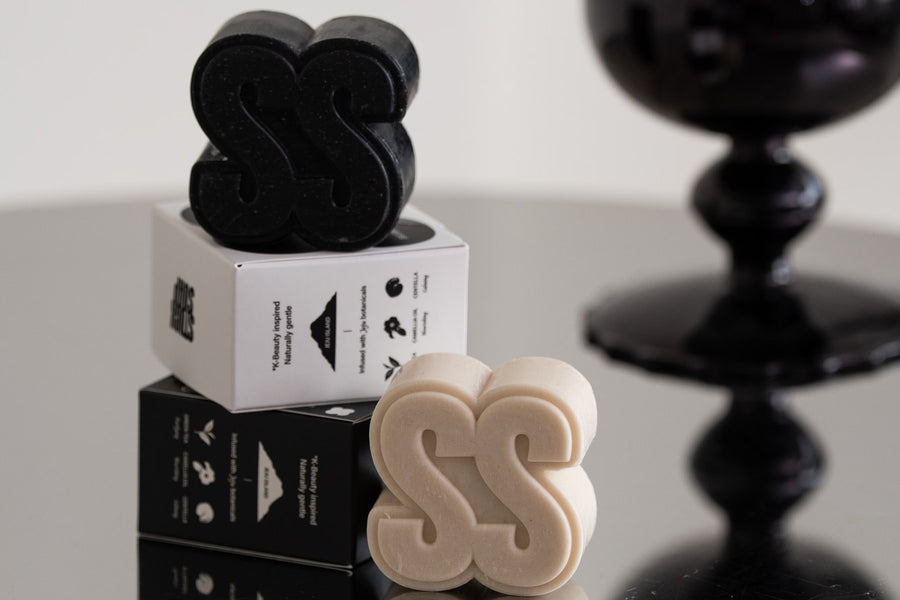
Step 1, cleanse: Liquid Shampoo or Shampoo Bar. Both are vegan and pH-balanced for dog skin, made with Green Tea, Camellia Oil, and Centella Asiatica for sebum control and skin-barrier support. The liquid is high-concentrate, so one pump is enough for most short-coated dogs, and the fine-bubble lather spreads easily over a smooth coat. Prefer zero-waste? A couple of passes with the Shampoo Bar over a wet coat does the same job.
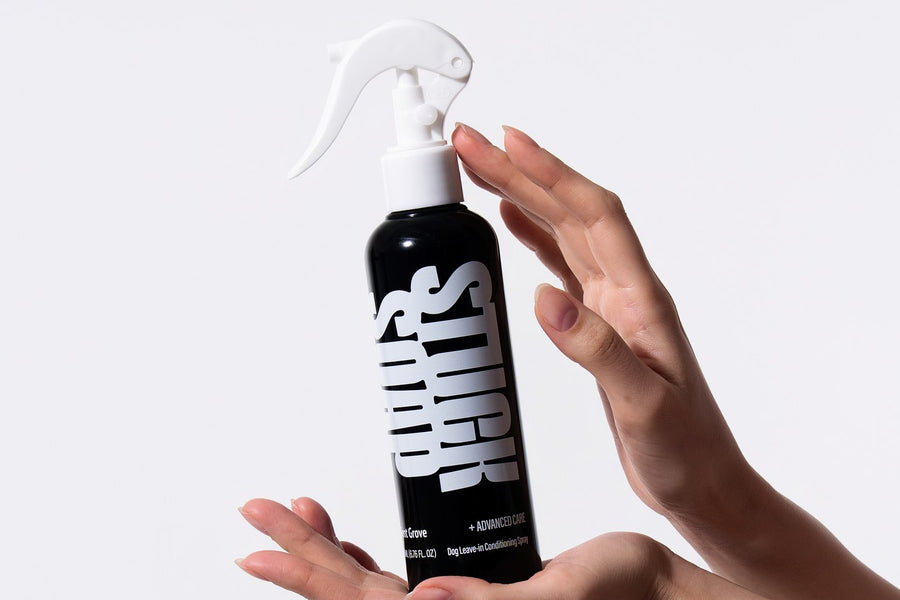
Step 2, condition: Leave-In Conditioning Spray. A lightweight, no-rinse mist built around three patented actives. We chose Mung Bean Sprout Extract (KR patent 10-1841429) as a plant-derived conditioning ingredient for a soft coat feel, Tannin Complex HR (10-0955389) for its coat-tidying role, and ODOR-BYE (10-2746186) for everyday freshness care between baths. More on the category in our leave-in conditioner guide.
Both come in Silent Grove (earthy) and Blush Garden (floral) at stucksoap.com.
FAQ: Short-Haired Dog Grooming
Do short-haired dogs need grooming?
Yes. Short-haired dogs don't mat, but they shed, collect dust and skin oil, and need occasional baths. A good routine is regular brushing with a bristle brush or rubber mitt, a bath when the dog is actually dirty, a thorough rinse, and a light conditioning step. The routine is lighter, not optional.
How often should I bathe a short-haired dog?
There's no single schedule. Frequency depends on lifestyle, skin, and how dirty your dog gets. Many short-coated house dogs only need a full bath every several weeks, with brushing and spot cleaning in between. If your veterinarian has recommended a specific bathing plan for a skin condition, follow that instead.
Why does my short-haired dog get flaky after a bath?
A common grooming cause is leftover shampoo. On a short coat there's little hair between product and skin, so residue sits directly on it. Try less shampoo, pre-lathered in water, and a longer rinse. If flaking continues or comes with redness, itching, or hair loss, see your veterinarian.
How much shampoo does a short-haired dog need?
Less than most people use. Short coats need only enough lather to cover the body thinly, so start small and dilute it in your hands or a cup of water before applying. With a concentrated shampoo, one pump is often enough. Using more mainly adds rinse time and residue risk.
Should I use a leave-in conditioner on a short coat?
It can help, if it's light. A no-rinse spray misted sparingly after toweling or before brushing keeps a short coat looking tidy between baths. Heavy creams or oils tend to sit on the skin of short-coated dogs. Keep any spray on the body and away from the face and eyes.
How do I clean my French Bulldog's face folds?
Wipe inside each fold with a soft, damp cloth, then dry it gently so no moisture stays trapped. Keep shampoo and sprays away from the face. Routine cleaning is part of grooming, but a fold that looks red, smells, or seems painful needs a veterinarian, not a stronger product.
Sources
- American Kennel Club. How Often Should You Wash Your Dog?
- American Kennel Club. Dog Grooming at Home.
- American Kennel Club. Dog Skincare.
- American Kennel Club. Dry Skin on Dogs: Signs, Symptoms, Treatments.
- Merck Veterinary Manual, Pet Owner Version, Karen A. Moriello. Structure of the Skin in Dogs.
- American Veterinary Medical Association. Pet Care.
Keep It Light, Keep It Consistent
Brush often, wash lightly, rinse well, mist once. Build your short coat routine with our pH-balanced shampoo and Leave-In Conditioning Spray at stucksoap.com.