

Fall grooming in one minute
A good fall dog grooming routine changes how often you brush, how long you dry and how you care for the coat between baths. It does not change how often you bathe. Keep your summer bath interval or stretch it a little, brush more while the old coat comes out, and dry your dog all the way to the skin before they settle into a cooler, drier house.
That runs against instinct. In October there is suddenly more hair on the couch, the dog smells a bit more like a dog, and a bath looks like the obvious fix. Our companion piece, Fall Shedding in Dogs: Why the Coat Changes When the Days Get Shorter, explains why the coat turns over in fall. This article covers what to do about it, five adjustments in all, and none of them means more baths.
Fall dog grooming routine: the seasonal shift from a summer care schedule to a cool-weather one. You brush more often, keep the bath interval about the same, give drying more time, adjust for heated indoor air and do more care between baths, so the shedding coat gets managed without adding baths.
What changes in a fall dog grooming routine (and what doesn't)
Two things drive the change: the coat and the house. Many dogs drop their lighter summer hair as the days get shorter and grow a denser coat for winter. Indoors, the heat comes on and the air gets drier. Each of the five adjustments below follows from one of those two facts.
| Variable | Typical summer routine | Fall adjustment |
|---|---|---|
| Brushing frequency | Maintenance brushing, often once or twice a week | More often while the undercoat releases; several sessions a week for double coats |
| Bath interval | Set by swims, heat and outdoor dirt | Keep the same interval or stretch it slightly; no extra baths for shedding |
| Drying time | Warm air helps a damp coat finish drying on its own | Dry fully to the skin and allow more time in a cooler house |
| Indoor air | Open windows or air conditioning | Heating season brings drier air and more static |
| Between-bath care | Rinses after swims, quick paw checks | Brushing, paw and belly wipes, a light leave-in spray, regular skin checks |
Not sure where your dog's coat falls? Start with our coat type guide, because a Husky and a Whippet will need very different amounts of each adjustment.
Change 1: Brush more often while the coat turns over
Fall shedding is mostly a timing problem. The coat has decided to let go of hair, and you get to choose whether it comes out on a brush or on the rug. The Merck Veterinary Manual describes the pattern plainly:
"Dogs normally shed hair in the early spring and early fall."
The American Kennel Club names the trigger:
"Shedding is primarily triggered by changes in daylight and temperature."
Water won't stop daylight from changing. A bath can loosen some hair, but the undercoat keeps releasing for weeks, and every bath taken to "deal with shedding" adds drying time and more contact with shampoo. The brush does this job better, because you can repeat it as often as needed and it never wets the skin.
How often to brush in fall, by coat type
The AKC notes that dogs that shed heavily may need brushing several times a week or even daily during peak shedding. A practical way to set your own frequency:
- Double coats (Huskies, Shepherds, Goldens, Corgis): three to five sessions a week at the peak, sometimes daily for a short stretch.
- Medium and long single coats: two or three sessions a week, with extra attention behind the ears, under the legs and anywhere a collar or harness rubs.
- Short coats: one or two quick passes a week with a rubber curry or bristle brush. See our brushing schedule by coat type and season for the full breakdown.
A five-minute fall brushing pass
- Start at the back end and work toward the head, so loose hair falls away from the sections you've already done.
- Part the coat with one hand and brush from the skin out in small sections, not just across the top.
- For double coats, follow the slicker or undercoat rake with a comb to catch what's left.
- Check the skin as you go. You're looking for redness, flakes or anything new.
- Stop while your dog is still relaxed. Two short sessions beat one long fight.
There is a scent benefit too. Dead undercoat holds oils and odor close to the skin, which is a big reason dogs often smell stronger in fall. Brushing that hair out usually helps more than another bath would.
Change 2: Keep the bath interval, or stretch it a little
This is the core of the fall adjustment. Whatever bath interval worked for your dog through summer is a good starting point for fall, and many dogs do well with a little more time between baths. If your dog was bathed every four weeks in July, four to five weeks is a reasonable fall rhythm. Bathe a dog weekly in fall only if your veterinarian has put them on that schedule.
Why extra baths work against the coat in fall
Dog skin and coat depend on their own oils. According to the Merck Veterinary Manual, sebum gives the coat its sheen and helps protect the skin. Washing too often removes more of that layer than the skin can easily replace. The ASPCA's cold-weather guidance makes the same point:
"Washing too often can remove essential oils and increase the chance of developing dry, flaky skin."
Fall stacks two more things on top of that. The air indoors is getting drier, and a wet coat takes longer to dry. Adding baths in this season means more stripping, more damp hours and more time in dry air, all in exchange for shedding that comes back the next day.
When the interval should change
Some dogs follow a different schedule for good reasons. A veterinarian may prescribe medicated baths for a skin condition, and that plan comes first. Dogs that react to seasonal pollen may also need a different approach (our fall itch calendar covers the timing), but that is a conversation to have with your vet, not a decision to make from a blog post. A roll in something truly awful also earns an unscheduled bath, and that's fine. The rule is not "never bathe." The rule is "don't bathe more because it's fall."
When the bath does come around, make it count. A full wash that actually reaches the skin lasts longer than two quick ones. Our guide to getting shampoo through a double coat walks through the method.
Change 3: Give drying more time
In August a damp dog dries off on the porch. In late October that same dog lies down on a cool floor with a coat that feels dry on top and is still wet underneath. Fall drying fails in exactly that way: the outer guard hairs dry while the undercoat holds water against the skin.
Why drying takes longer in fall
Cooler room temperatures slow evaporation. A coat that is growing in its winter density holds more water to begin with. If you haven't brushed well before the bath, matted or packed undercoat traps moisture even longer. That's one more reason brushing comes first.
How to dry a fall coat properly
- Brush thoroughly before the bath so water and shampoo can reach the skin and leave it again.
- Squeeze excess water out by hand, then press with an absorbent towel. Don't rub in circles.
- Use a second dry towel on thick coats. One towel is rarely enough for a double coat.
- If your dog tolerates a dryer, use a cool or low setting, keep it moving and hold it at a distance from the skin.
- Part the coat in several places and touch the skin. If it feels cool and damp, you aren't done.
- Keep your dog out of drafts and off cold floors until the coat is dry at the base.
The ASPCA advises keeping your home humidified and toweling your pet dry as soon as they come inside. The same habit applies after rainy fall walks, not just after baths.
Change 4: Plan for indoor air (heat, dryness and static)
Your dog spends most of fall and winter indoors, so the house is part of the grooming routine whether you plan for it or not. Forced-air heating tends to lower indoor humidity, and dry air shows up in the coat as static, flyaway hair and a duller look.
What dry indoor air does to the coat
Static is mostly a comfort and manageability problem. Some dogs flinch at the little zaps during petting, and a staticky coat holds onto dust and loose hair. Dry air also gives dull, flaky-looking skin a reason to show up. Watch for that, and don't answer it by bathing more.
Small household fixes
- Run a humidifier in the rooms where your dog sleeps and spends the day.
- Keep beds away from heating vents and radiators.
- Make sure fresh water is always available. Dogs drink less when they're less active, and that shows in the coat too.
- Brush out loose undercoat often. Dead hair tangles and builds static faster than a clean coat.
- Use a light, no-rinse conditioning spray between baths so the coat feels softer and easier to brush.
Change 5: Let between-bath care do the heavy lifting
If you take one idea from this article, take this one: in fall, most of the grooming happens between baths. Muddy paws, a damp belly after a walk through wet grass, a coat that smells a little musty by Thursday. None of these calls for a full bath. They call for small, targeted habits you can do in a few minutes.
The weekly between-bath reset
- Wipe paws and the belly with a damp cloth after wet walks, then dry them with a towel.
- Spot-clean muddy patches with a little water instead of washing the whole dog.
- Check ears, paw pads and the skin under the collar once a week.
- Brush on your fall schedule, then mist a light leave-in spray over the coat and brush it through.
- Wash bedding and blankets, which hold onto shed hair and odor.
Our realistic weekly routine for between baths goes deeper into each habit. If you want to know where a leave-in product fits, what a leave-in conditioner for dogs actually does (and doesn't) sets honest expectations.
When it is not a grooming problem
Brushing and between-bath care handle normal fall shedding and normal dog smell. They don't handle skin problems. If your dog scratches or licks persistently, develops hot spots, has flaking that keeps returning, loses hair in patches, or carries an odor that brushing and a regular bath don't lift, take them to your veterinarian. Those signs need a diagnosis, not a new shampoo.
A weekly fall dog grooming routine you can keep
Here is how the five changes fit together for a typical medium or double-coated dog. Shorten the brushing for short coats and lengthen it for heavy shedders.
| When | Task | Time |
|---|---|---|
| After wet or muddy walks | Wipe paws and belly, towel dry | 2 to 3 minutes |
| Three times a week (more at peak shedding) | Full brushing pass down to the skin | 5 to 10 minutes |
| Once a week | Skin, ear and paw check; light leave-in spray brushed through; wash bedding | 10 minutes |
| On your summer bath interval (or slightly longer) | Brush, bathe to the skin, rinse well, dry completely | 45 to 90 minutes, depending on coat |
| Any time something looks wrong | Note it and call your veterinarian | As needed |
For more on how long a good bath actually lasts before the next one is due, see how long a dog stays clean after a bath.
Where STUCK SOAP fits
Our products are built for this kind of routine, with fewer baths and good ones. For bath day, STUCK SOAP Liquid Shampoo and the Shampoo Bar are pH-balanced for dog skin and made with Green Tea, Camellia Oil and Centella Asiatica. The fine-bubble lather is meant to work down through a thick coat, and the formula is concentrated, so one pump is enough. The bar is the zero-waste option. Both are vegan and come in two scents, Silent Grove (earthy) and Blush Garden (floral).
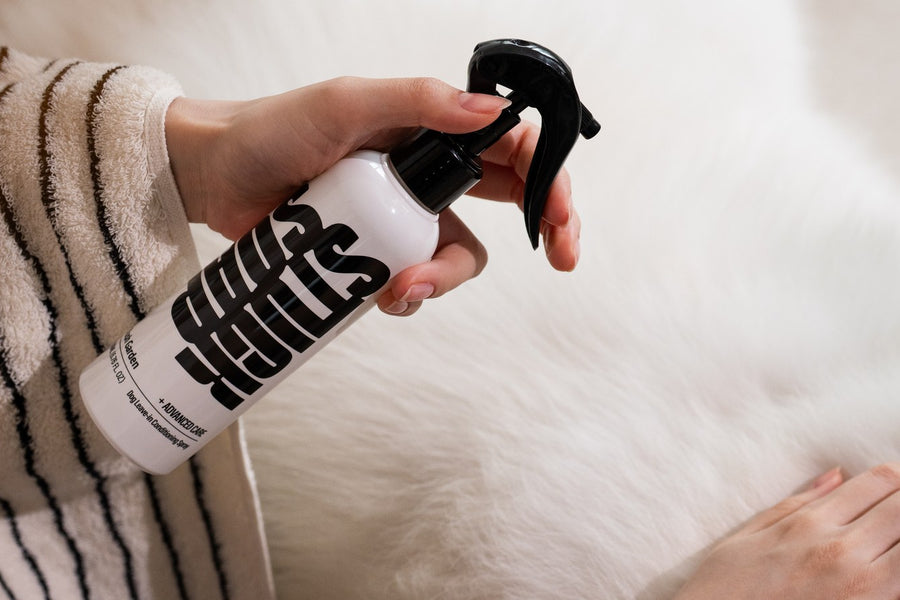
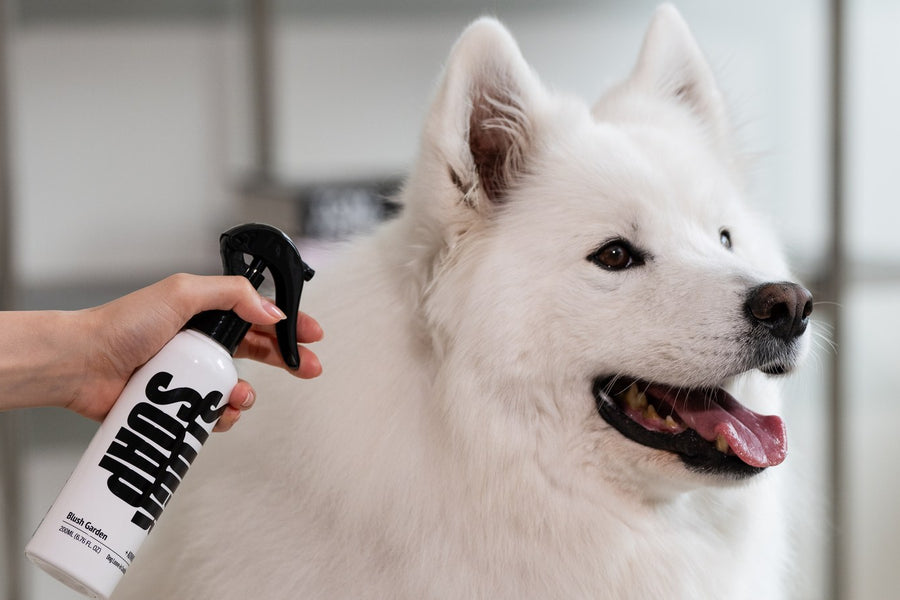
Between baths there is the Leave-In Conditioning Spray, a lightweight no-rinse formula in the same two scents. We chose three patented actives for it. Mung Bean Sprout Extract (KR patent 10-1841429) is a conditioning, moisture-oriented botanical for a coat that lives in heated air. Tannin Complex HR (KR patent 10-0955389) was selected for coat feel and manageability during brushing. ODOR-BYE (KR patent 10-2746186) is the odor-oriented component, included for the days when your dog is due for some freshening but not a full wash. These are cosmetic grooming products. They are not a substitute for veterinary care.
Fall dog grooming FAQ
Should I bathe my dog more often in the fall?
No. Most dogs do best when you keep the summer bath interval or stretch it slightly. Fall shedding is a brushing job, not a washing job, and drier indoor air plus longer drying times make extra baths harder on skin and coat. If your veterinarian has prescribed a bathing schedule, follow that instead.
How often should I brush my dog in the fall?
Brush more often than you did in summer. Double-coated dogs usually need several sessions a week during peak shedding, sometimes daily. Short, single-coated dogs may need only one or two quick passes a week. Work down to the skin with the right tool, and stop before your dog gets restless or the skin turns pink.
How long should it take to dry my dog after a fall bath?
Longer than in summer, especially for thick or double coats. A coat can feel dry on top while the undercoat stays damp near the skin. Towel firmly, use a cool or low-heat dryer if your dog tolerates it, and check by parting the coat at the skin before calling it done.
Why does my dog get static and a dry-looking coat once the heat comes on?
Forced-air heating tends to lower indoor humidity, and dry air makes hair more prone to static and a dull, flyaway look. Brushing out loose undercoat, running a humidifier in rooms your dog uses, and a light no-rinse conditioning spray between baths can help the coat feel more manageable.
What counts as between-bath care for dogs?
Between-bath care is everything that keeps a dog comfortable without a full wash: brushing, wiping paws and the belly after walks, spot-cleaning muddy patches, checking ears and skin, and a light leave-in spray on the coat. In fall it carries most of the routine, which is why baths do not need to increase.
When should fall skin changes go to the vet?
Book a veterinary visit if your dog scratches or licks persistently, develops red or raw hot spots, has flaking that keeps returning, loses hair in patches, or carries an odor that brushing and a normal bath do not lift. Grooming products support comfort and coat feel; they do not diagnose or treat skin conditions.
Sources
- American Kennel Club: Dog Shedding: When Dogs Shed Most and How to Manage It
- Merck Veterinary Manual: Structure of the Skin in Dogs
- ASPCA: Cold Weather Safety Tips
Ready for fewer, better baths this fall? Shop the Liquid Shampoo, the Shampoo Bar and the new Leave-In Conditioning Spray in Silent Grove or Blush Garden at stucksoap.com.