


Medicated Dog Shampoo vs Regular Shampoo: Which One You Are Supposed to Be Using
The short answer on medicated dog shampoo vs regular shampoo: medicated shampoo is a treatment product with active drug ingredients, used on a schedule a veterinarian sets, and regular shampoo is a cosmetic cleanser for routine bathing. If your vet has put your dog on a medicated wash, use that bottle on their schedule and set everything else aside until they tell you the course is finished.
That is an odd thing for a grooming brand to lead with, so we will be plain about it. STUCK SOAP makes a non-medicated shampoo. If your dog is in the middle of treatment for a skin problem, this is not the moment for our bottle, or for any other cosmetic shampoo. Finish what your vet prescribed. Come back after.
What "medicated" actually means on a dog shampoo label
A medicated shampoo is a topical therapy delivered in a wash. It carries an active ingredient at a concentration chosen to do something specific to the skin, and the rest of the formula exists mainly to hold that active in contact with the coat long enough to matter.
Definitions worth keeping straight:
- Medicated shampoo: a shampoo containing an active pharmaceutical or antiseptic ingredient, intended to address a diagnosed skin condition under veterinary direction.
- Everyday (cosmetic) shampoo: a cleanser intended to remove dirt, oil, and odor from a healthy coat without treating disease.
- Contact time: the number of minutes a product must sit on the coat before rinsing in order to work as intended.
- Course: the full prescribed run of a treatment, including baths that happen after visible symptoms have already faded.
The active ingredients you will see, generically
Chlorhexidine and miconazole are antiseptic and antifungal actives, often paired. Ketoconazole is another antifungal you will find in veterinary washes. Benzoyl peroxide is a strong degreasing and follicle-flushing agent. Salicylic acid and sulfur show up in keratolytic formulas aimed at scale and flaking. Each of these belongs to a different job, and none of them is a general-purpose upgrade to your dog's bath routine.
The reason this matters is that the shampoo is not the decision. The diagnosis is. Itching, flaking, greasy patches, and odor look nearly identical to an owner and can come from allergy, parasites, yeast overgrowth, bacterial infection, endocrine disease, or a combination. The Merck Veterinary Manual dog owner resources walk through how wide that differential really is. Picking an active off a shelf is guessing at which door to open.
What an everyday shampoo is actually for
Routine shampoo has a narrower and more honest job: lift dirt and excess sebum, leave the skin barrier intact, and rinse clean. That is it. A good one is pH balanced for dog skin, which sits in a different range than human skin, and it does not strip the coat so aggressively that the skin overproduces oil in response. If you have ever wondered why the human bottle in your shower is a bad idea, we covered it in can I use human shampoo on my dog.
Everyday shampoo also has to match the skin it is going on, which is not the same as matching the coat. A dense double coat on oily skin and a dense double coat on dry skin want different things. We broke that down in dog skin types, not coat types, and it is the single most useful frame for choosing a routine product once treatment is over.
Medicated dog shampoo vs regular shampoo, side by side
The differences are not marketing differences. They change what you do in the tub, how often, and for how long.
| Dimension | Medicated shampoo | Everyday shampoo |
|---|---|---|
| Purpose | Treat a diagnosed skin condition | Clean a healthy coat, support the skin barrier |
| Who decides usage | Your veterinarian | You |
| Key ingredients | Antiseptic, antifungal, keratolytic, or degreasing actives | Surfactants, conditioning and barrier-support ingredients |
| Contact time | Required, commonly around 10 minutes | Not therapeutic; short soak only helps lather spread |
| Frequency | Set by prescription, sometimes twice weekly | Typically every 3 to 6 weeks, depending on skin and lifestyle |
| Duration of use | A defined course, then stop | Ongoing, indefinitely |
| If misused | Over-drying, barrier damage, or an unresolved condition that rebounds | Insufficient for a real skin problem; delays proper care |
Medicated dog shampoo vs regular: what changes on bath day
Contact time is the clearest tell. A medicated bath is mostly waiting. You lather, you set a timer, and you keep the dog wet and calm for the full interval the label or your vet specifies, often about ten minutes, because the active needs that window against the skin. Rinsing early is the most common way a prescribed course quietly fails.
An everyday bath has no such requirement. Lather, work it through, rinse. A brief pause helps a high-concentrate formula spread through a dense coat, but nothing therapeutic is happening in those seconds. We wrote out the timing logic for both cases in how long to leave shampoo on a dog.
The other shared rule: rinse until the water runs clear, then rinse again. Residue causes its own irritation, and owners frequently mistake a rinse problem for a product problem. If your dog gets itchy a day after a bath, start there, not with a new bottle. Shampoo residue on a dog covers what a genuinely finished rinse feels like.
Who decides when your dog goes back to everyday shampoo
Your veterinarian does. Not the calendar, not the bottle running low, and not the fact that the scratching stopped.
Skin has a habit of looking better before it is better. Redness fades, the smell goes, the dog stops chewing at a paw, and the owner reasonably concludes the problem is solved. Underneath, the population that caused the trouble may still be present, and stopping at that point is how a condition returns three weeks later looking worse than the first time. This is why prescriptions run past symptom relief, and why the recheck appointment exists.
What a vet is watching for is different from what you can see in the living room: the texture and thickness of the skin, whether the coat is regrowing in previously affected areas, cytology if they are running it, and whether anything new has appeared. Ask them directly, at the recheck, for two things: the date the medicated course ends, and what you should be using afterward. Get it written on the discharge notes.
How to transition back to an everyday shampoo
Once you have that clearance, the handoff is straightforward:
- Confirm with your veterinarian that the medicated course is complete, not paused, and note whether they want any maintenance baths kept in the rotation.
- Wait out the gap they recommend before the first non-medicated bath. Some plans call for a week of no bathing at all so the barrier can settle.
- Choose a routine shampoo matched to your dog's skin type, not the coat length, and check the label honestly. Terms like hypoallergenic carry less regulatory weight than most owners assume, which we unpacked in hypoallergenic vs fragrance-free labels.
- Patch the first wash. Use a small amount on one area, rinse fully, and give it 24 hours before doing a whole-body bath.
- Dose conservatively on the first full bath. Over-application is the usual cause of an incomplete rinse; our dog shampoo dosage chart gives real amounts by weight.
- Space baths out. Return to a normal interval rather than the compressed medicated frequency, and let the skin recover its own oils.
- Watch for two weeks and report anything that comes back. A flare after a bath is information your vet wants, not something to troubleshoot alone. Hives after a bath covers how to tell a product reaction from a seasonal one.
Why we are telling you not to buy our shampoo right now
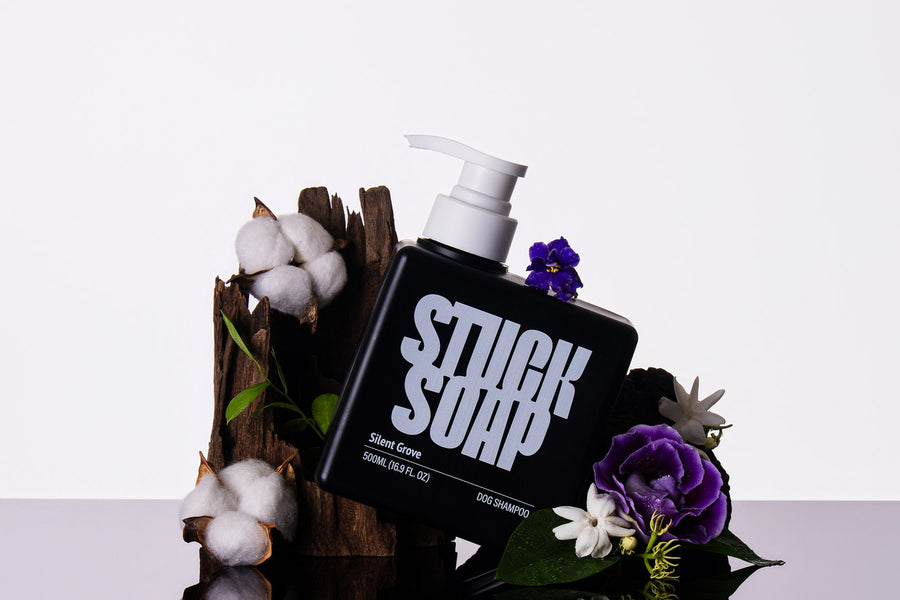
STUCK SOAP is a non-medicated cosmetic grooming product. Our liquid shampoo and shampoo bar are built around green tea, camellia oil, and centella asiatica, vegan, pH balanced for dog skin, formulated to support sebum control and the skin barrier during routine washing. That is the whole claim, and we are not going to stretch it.
What we will not say is that any of that treats an infection, resolves a fungal problem, or replaces something your vet prescribed. It does not. On the medicated dog shampoo vs regular question, our product sits firmly on the regular side, and the regular side is the wrong tool for an active skin condition.
So if you landed here mid-treatment: finish the course. Use what your vet gave you, for the contact time they specified, for as many weeks as they specified. We would rather be the brand you remember as honest in week two than the one you blame in week six. When the skin is healthy again and you are picking a routine shampoo, we will be here.
Practical takeaways
- Medicated shampoo is therapy. Everyday shampoo is maintenance. Neither substitutes for the other.
- Never start, stop, extend, or shorten a medicated course on your own judgment.
- Respect contact time. A rushed rinse turns a prescribed bath into an expensive wetting.
- Symptom relief is not the same as resolution. The recheck appointment is the checkpoint.
- When you do return to routine care, match the shampoo to the skin, patch test, and rinse thoroughly. If dryness lingers after treatment, our K-beauty hydration approach to dry dog skin is a reasonable next read.
- Read pet product labels with a skeptical eye. Dog shampoo regulation in the US explains what those claims do and do not guarantee.
Frequently asked questions
Is medicated dog shampoo better than regular dog shampoo?
Neither is better. They do different jobs. Medicated shampoo carries active ingredients meant to address a diagnosed skin problem on a veterinarian's schedule. Regular shampoo cleans a healthy coat and supports the skin barrier between baths. Using a treatment product as a daily cleanser is the common mistake.
Can I use medicated shampoo on my dog without a prescription?
Some medicated shampoos sell over the counter, but the label does not tell you what your dog actually has. Itching, flaking, and odor come from many causes that look identical to an owner. Ask your veterinarian to identify the problem first, then follow the exact schedule they give you.
How long do you leave medicated dog shampoo on?
Most medicated formulas require a contact time, commonly around ten minutes, so the active ingredients can work before rinsing. Your veterinarian or the product label sets the exact number. Everyday shampoos have no therapeutic contact requirement, though a short soak still helps lather spread evenly through a dense coat.
When can my dog go back to a normal shampoo?
When your veterinarian says the course is finished. That call depends on how the skin looks under examination, not only on whether scratching stopped. Symptoms often fade before the underlying issue resolves, which is why stopping early can undo progress. Ask at the recheck appointment and get the answer in writing.
Can I alternate medicated and regular shampoo in the same week?
Only if your veterinarian designs that rotation. Some treatment plans do pair a medicated bath with a gentler wash on off days, and some do not, because extra bathing can strip the coat. The rotation is a clinical decision, so bring the question to your appointment rather than improvising.
Is STUCK SOAP a medicated shampoo?
No. STUCK SOAP is a non-medicated cosmetic grooming product, formulated with green tea, camellia oil, and centella asiatica and pH balanced for dog skin. It is designed to support routine washing on a healthy coat. It does not treat infection, and it is not a substitute for anything your veterinarian prescribes.
Sources
- Merck Veterinary Manual, Dog Owners. Reference on canine skin disorders and the range of underlying causes.
- American Kennel Club, Expert Advice on Health. Owner-facing guidance on grooming, bathing, and skin health.
- American Veterinary Medical Association, Pet Owner Resources. Guidance on working with your veterinarian and following treatment plans.
Wash well, once the skin is ready
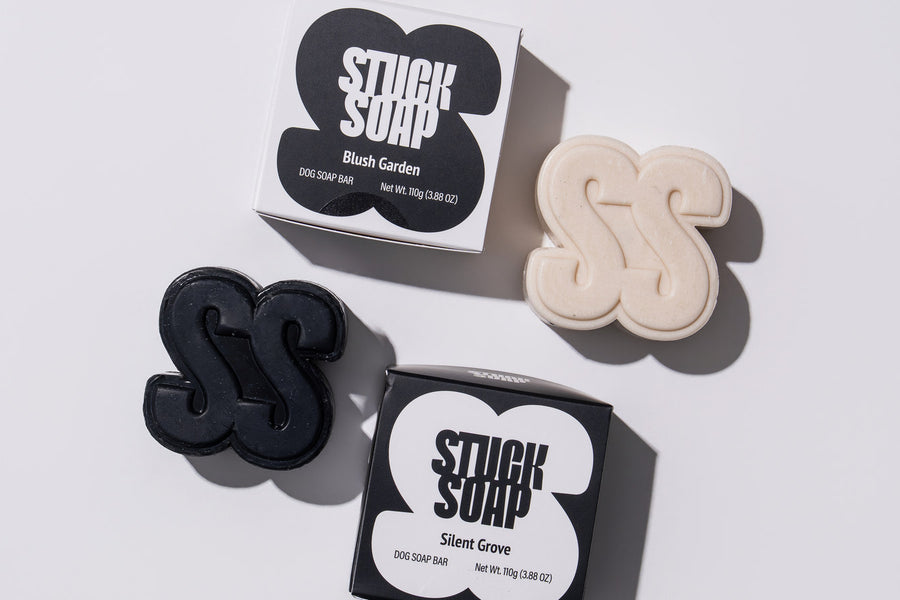
Finish your vet's course first. When your dog is cleared for routine care, our liquid shampoo and zero-waste shampoo bar are available in Silent Grove and Blush Garden at stucksoap.com. One pump is enough.