


What "Long-Lasting Scent" Actually Means on a Dog Shampoo Bottle
A dog shampoo that smells good and lasts long is doing three separate jobs, and most bottles only tell you about one of them. The phrase "long-lasting scent" usually describes fragrance dose and fixation, which is how much perfume oil went into the formula and how well it clings to hair. It says nothing about whether the odor source was removed, and nothing about how fast your dog's skin will rebuild the oil that carries smell in the first place.
That gap is why two owners can buy the same bottle and report opposite results. One says the scent vanished by Tuesday but the dog smelled fine all week. The other says the perfume was still noticeable on Friday, sitting on top of a dog that had started to smell like a dog again. Both are telling the truth. They are just describing different mechanisms.
Three mechanisms hiding behind one marketing phrase
Pull "long-lasting" apart and you get three things that behave independently. Fragrance dose and fixation is a perfumery decision. Odor neutralization is a cleaning outcome. Residual sebum is a skin and formulation outcome. A product can be strong at one and weak at another, which is exactly why the phrase on the front label is close to useless as a quality signal.
| Mechanism | What it actually does | How long it reads as "lasting" | What it does NOT fix |
|---|---|---|---|
| Fragrance dose and fixation | Deposits perfume oils and fixatives that bind loosely to the hair shaft and release over time | Hours to a few days, depending on coat length, texture, and how much the dog moves and rubs | Anything about cleanliness. Perfume can sit on top of an unwashed odor source and both will be present. |
| Odor neutralization | Removes or chemically alters the molecules causing the smell, mostly by lifting oil, saliva residue, and debris off skin and hair | Until new odor is generated or picked up, which is a function of the dog, not the bottle | Nothing about how the dog will smell to you in a perfume sense. A well-cleaned dog can smell like almost nothing. |
| Residual sebum | Determines how much skin oil remains after rinsing, and how fast the skin rebounds and produces more | Sets the clock on when doggy odor returns and how quickly the coat re-absorbs environmental smells | It is not a fragrance property at all, and it is almost never described on packaging. |
Mechanism one: how much fragrance went in, and whether it stays put
Fragrance in a rinse-off product has a hard problem to solve. Most of what you pour on gets washed down the drain within four minutes. What remains is a thin deposit of the heavier, less volatile molecules that happen to have an affinity for keratin and for the conditioning agents left behind. Perfumers use base notes, woods, resins, musks, and certain fixatives precisely because they evaporate slowly and hang around.
Coat type changes this more than most people expect. A dense double coat holds fragrance far longer than a short single coat, because there is simply more surface area and more trapped air. A wiry terrier coat behaves differently again. Two dogs, same bottle, same bath, wildly different scent duration, and no formulation difference to explain it. This is also part of why coat-based advice keeps failing owners, and why skin type is the more useful lens than coat type for most decisions.
Mechanism two: removed or covered
Neutralizing and masking are frequently used interchangeably in copy, and they are not the same event. Masking adds a louder smell on top of a quieter one. Both molecules are still there, and since the mask is usually the more volatile of the two, it fades first and the original odor comes back into focus. Neutralizing removes the odor molecule or changes it into something that does not register.
In shampoo, most real neutralization is unglamorous: surfactants emulsify the sebum, the sebum carries the odor compounds, and the rinse water takes both away. That is the whole trick. It is why the musty-towel smell so many owners describe tends to be a washing and drying problem rather than a fragrance problem, which we broke down in detail in why does my dog smell musty.
Mechanism three: the sebum nobody mentions on the label
Sebum is the reason dog odor is a recurring event rather than a one-time cleanup. Skin produces oil continuously. That oil is a comfortable home for normal skin microorganisms, and their metabolic byproducts are a large part of what we recognize as dog smell. The Merck Veterinary Manual's owner-facing overview of canine skin disorders is a useful primer on how skin, oil, and normal flora interact.
Sebum also works as a sponge. A coat carrying more residual oil picks up and holds more of whatever the dog walks through, whether that is wet grass, city sidewalk, or the inside of a car. That is the underappreciated half of "lasting freshness." Two dogs bathed on the same day with the same product will diverge fast if one has more oil left on the skin. The corn chip smell on paws is a cousin of the same story, covered in why do my dog's paws smell like corn chips.
Strip too aggressively and you get the opposite failure. Skin that has been over-cleansed can rebound, and the coat ends up feeling dry while still smelling like a dog within days. Balance beats brute force here, which is where pH-appropriate formulation and sebum control matter more than fragrance strength.
A dog shampoo that smells good and lasts long is solving two problems, not one
Here is the reframe worth carrying into your next purchase: "the scent lasts a long time" and "my dog does not smell bad" are separate outcomes with separate causes. Confusing them is the single most common mistake in this category.
Fragrance longevity measures the perfume. Odor control measures the wash. Only one of those two is printed on the front of the bottle.
A heavily fragranced product with mediocre cleansing can fade in 36 hours and leave you with an odor you thought you had solved. A lightly fragranced product with excellent sebum control can go quiet almost immediately and leave a dog that reads as neutral and clean for days. Neither result tells you the product is good or bad. It tells you which lever the formulator pulled.
How long any of it lasts on your specific dog varies enormously. Reported ranges across the pet grooming category run from about a day to roughly a week, and that spread is driven by coat, climate, bathing frequency, drying method, and lifestyle rather than by the shampoo alone. We mapped the variables in how long a dog stays clean after a bath.
Reading the bottle: claim versus information
US pet grooming products are not held to the same labeling regime as human cosmetics or animal drugs, which we walked through in are dog shampoos regulated in the US. Practically, that means marketing language on the front carries less weight than the ingredient list on the back.
| Claim on the bottle | What it actually tells you | What to check instead |
|---|---|---|
| "Long-lasting scent" | Fragrance was dosed and fixed with duration in mind | Whether the formula also addresses oil and rinse-out |
| "Odor eliminating" | Could mean cleansing, could mean a masking accord | Surfactant system, pH claim, whether sebum is mentioned at all |
| "Stays fresh for X days" | A marketing estimate under unstated conditions | Whether any condition is disclosed. If not, treat it as soft. |
| "Deodorizing" | Usually fragrance-forward, sometimes with absorbent or chelating support | Whether the odor source is being removed or covered |
| "Fresh-from-the-groomer scent" | An aesthetic target, essentially a perfume brief | Nothing about cleaning performance. Judge separately. |
Fragrance is a design decision, not a red flag
There is a strain of pet content that treats any fragrance as a warning sign. That framing is lazy. Fragrance is a formulation choice with tradeoffs, the same as viscosity, foam profile, or preservative system. Some households want a dog that smells like nothing. Some want a dog that smells like a walk in a forest. Both are legitimate briefs, and a formulator hits them on purpose.
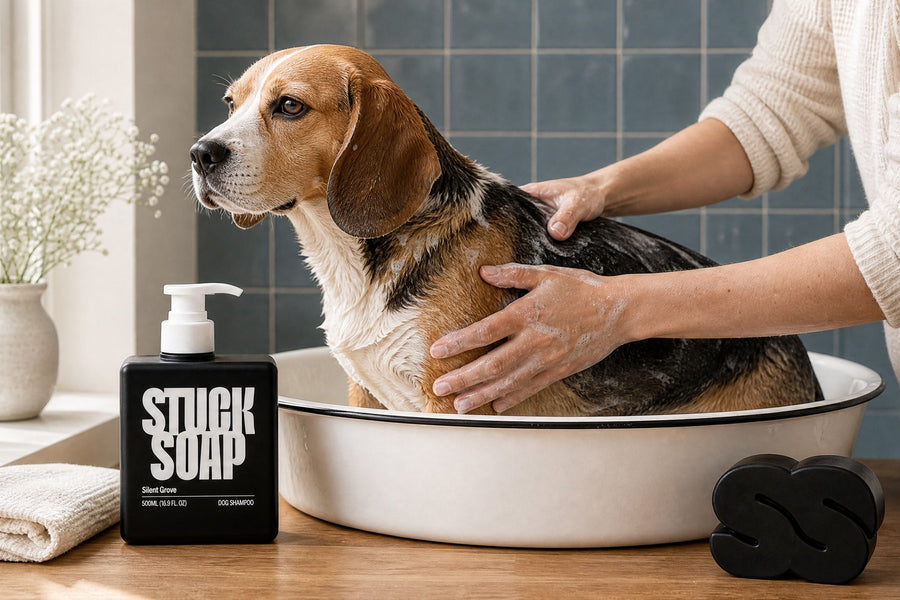
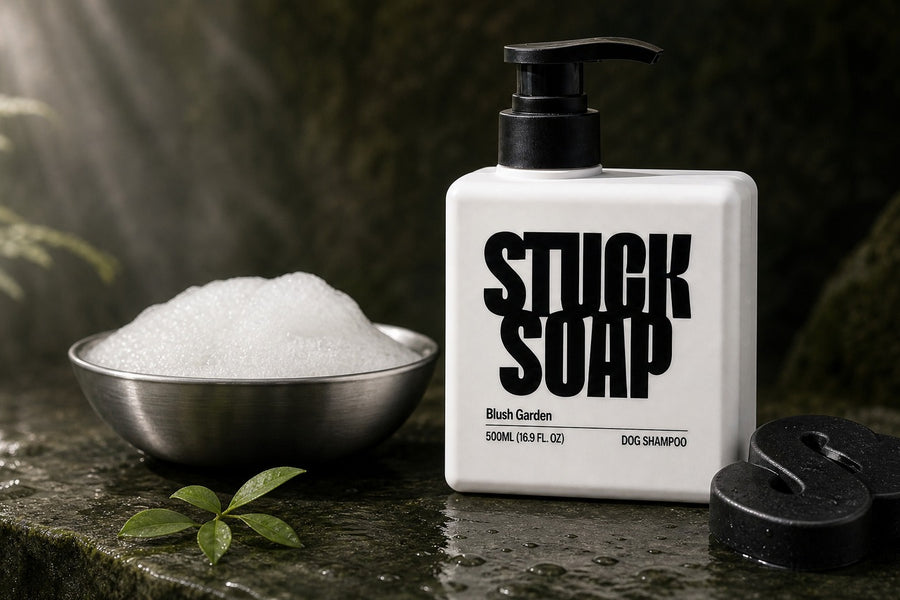
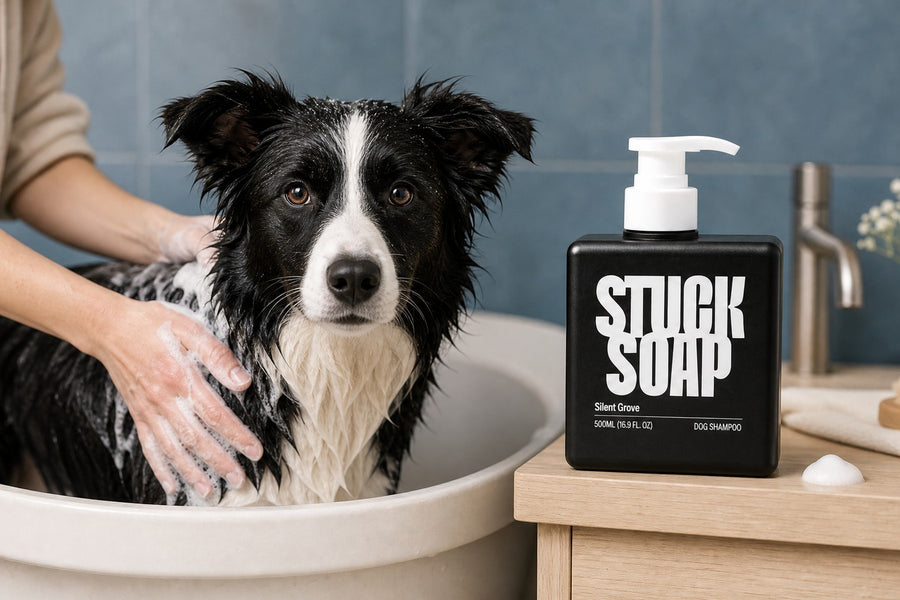
We built two scents at STUCK SOAP for exactly that reason. Silent Grove is earthy, low and green, designed to read as "clean air after rain" rather than as a product. Blush Garden is floral and brighter, for people who want the bath to be noticeable. Same base formula philosophy, two different personalities, chosen deliberately rather than defaulted into. The Korean formulation tradition behind that approach, where skin comfort and sensory design are treated as one project, is unpacked in what makes K-beauty dog shampoo formulas different.
What we do not do is let scent stand in for cleaning. Green tea, camellia oil, and centella asiatica are in the formula for skin barrier support and sebum balance, and the fine-bubble lather exists so the surfactant reaches skin without needing a huge dose. If you want to try one, the liquid shampoo and shampoo bar both come in either scent.
What to look for in a dog shampoo that smells good and lasts long
A working checklist for the next bottle you buy:
- Does the brand describe what the product does to oil, or only what it smells like?
- Is a pH position stated? Dog skin is not human skin, and formulas built for it say so.
- Is the scent named and characterized, or just "fresh"? Named scent profiles usually mean someone made a deliberate choice.
- Is concentration addressed? A high-concentrate formula that needs one pump rinses out more easily than a weak one you have to pour.
- Are duration claims tied to conditions, or floated free with no context?
The part you control: technique beats fragrance strength
Most freshness complaints trace back to process, not product. Five steps, in order:
- Brush out the dry coat first. Loose undercoat and debris hold odor and block lather from reaching skin.
- Wet to the skin, not just the surface. Dense coats can stay dry underneath for a surprisingly long time.
- Dose conservatively and emulsify in your hands or in water before applying. Our dosage chart by dog size gives concrete starting amounts.
- Rinse past the point you think you are done. Residue is a leading cause of dull coat and fast-returning smell, and the tell-tale signs are listed in how to know your dog is fully rinsed.
- Dry thoroughly, especially skin folds, armpits, ears, and between toes. Damp coat is where musty smell is born.
If you use a bar rather than a bottle, the lather-building step changes slightly and is worth getting right, as covered in how to use a dog shampoo bar.
When odor stops being a grooming question
Grooming products are cosmetics. They do not diagnose or treat anything, and some odors are signals rather than hygiene problems. Talk to a veterinarian if the smell changed suddenly, if it is yeasty or sweet, if it comes from one location such as the ears, a paw, a skin fold, or the mouth, or if it arrives alongside redness, discharge, hair loss, licking, or scratching. Odor that returns within a day of a careful, well-rinsed bath is also worth a professional look.
The American Veterinary Medical Association's pet owner resources and the American College of Veterinary Dermatology are good starting points for understanding when a skin or ear issue warrants a visit. If your dog has reacted to a bath in the past, our note on hives after a bath covers what to observe before your appointment.
Frequently asked questions
Why does my dog smell bad again two days after a bath?
Sebum returns. Skin keeps producing oil after every wash, and that oil holds odor compounds from saliva, environment, and normal skin flora. Fragrance sitting on the coat fades on its own schedule, so the smell you notice on day two is usually new odor, not old shampoo wearing off.
Does a stronger scent mean the shampoo cleans better?
No. Fragrance load is set independently of cleansing performance. A shampoo can carry heavy fragrance and mediocre surfactant balance, or a light scent and excellent sebum control. Scent strength tells you about the fragrance brief the formulator worked to, not about how much oil and debris the wash actually removed.
What is the difference between odor neutralizing and odor masking?
Masking layers a stronger smell over an existing one, so both are present and the cover fades first. Neutralizing removes or chemically changes the odor molecule, or removes the oil hosting it. Most of what a shampoo does is removal by washing, which counts as neutralizing in the practical sense.
How long should a dog shampoo scent last?
There is no standard. Reported ranges across the category run from about a day to roughly a week, and the spread comes from coat type, coat length, rinse quality, bathing frequency, and where the dog spends time. Treat any specific day count on a bottle as a soft estimate, not a specification.
Can rinsing affect how long my dog smells clean?
Yes, in both directions. Under-rinsed product leaves residue that traps dirt and can dull the coat, while over-washing strips oil and can push skin to produce more. A full rinse until water runs clear, followed by thorough drying, does more for lasting freshness than fragrance strength does.
Is fragrance in dog shampoo a bad thing?
Not by default. Fragrance is a formulation choice with tradeoffs, like every other choice on the ingredient list. Some dogs and some households do better with less. What matters is that scent is dosed deliberately, disclosed on the label, and never used as a substitute for cleaning performance.
When is dog odor a reason to call a veterinarian?
When it changes suddenly, smells yeasty or sweet, comes from one spot such as ears, paws, or a skin fold, or arrives with redness, discharge, licking, or scratching. Odor that returns within a day of a proper bath also deserves a professional look rather than another wash.
Sources
- Merck Veterinary Manual, Skin Disorders of Dogs (pet owner edition)
- American Kennel Club, Expert Advice: Health
- American Veterinary Medical Association, Pet Owner Resources
- American College of Veterinary Dermatology
Pick the scent you actually want
Silent Grove for earthy and quiet, Blush Garden for floral and bright. Same vegan, pH-balanced formula with green tea, camellia oil, and centella asiatica, in a 500ml liquid or a zero-waste bar. Choose the personality, and let the wash do the odor work. Shop STUCK SOAP.