


Why Your Dog Smells So Good After the Groomer, and How to Get That at Home
Your dog smells better after a salon visit because the groomer changed four things about the bath, not because of one secret bottle: they diluted the shampoo in water, washed twice, dried the coat completely, and finished with a light scent product. If you have ever asked why does my dog smell so good after the groomer and then watched that freshness fade two days after a bath you gave yourself, the gap is method, not merchandise.
That is genuinely good news. Three of those four variables cost nothing to copy. The fourth is a separate product category that you can take or leave. This article is the map: each variable gets its own section here, and each section points to the deeper piece where the details live.
Why Does My Dog Smell So Good After the Groomer? The Four-Variable Answer
Groomers are not working with magic. They are working with volume, repetition, and equipment, and every one of their habits exists because it solves a specific failure mode of home bathing. Here is the whole system on one page.
| Variable | What a groomer typically does | What a typical home bath does | Effect on smell |
|---|---|---|---|
| 1. Dilution | Mixes concentrate into water in a bottle or jug before it touches the coat | Squeezes product straight onto the back and rubs | Diluted product spreads to skin and rinses out clean; neat product sits, streaks, and leaves residue |
| 2. Two-pass wash | First pass strips surface oil and grime, second pass actually cleans | One pass, often rushed, over a coat still coated in sebum | A single pass mostly removes what was on top; the odor source stays at the skin |
| 3. Complete drying | High velocity dryer takes the coat to bone-dry at the skin | Towel, maybe a warm room, dog left slightly damp | Residual damp is the single biggest reason clean smell disappears fast |
| 4. Finishing scent | A light finishing spray or cologne at the very end | Usually skipped entirely | Adds the recognizable salon note on top of an already clean coat |
Variable 1: Dilution, or Why Groomers Rarely Pour Straight From the Bottle
Dilution means mixing a measured amount of shampoo into warm water before applying it, rather than dispensing concentrate directly onto the coat. Walk past any grooming tub and you will see the same setup: a squeeze bottle or a mixing jug, shampoo in the bottom, water on top, shaken.
The reason is mechanical. A dog's coat is not a flat surface, it is thousands of fibers with a layer of sebum on them and skin underneath. Concentrated product dropped onto that surface behaves like syrup on a sponge. It clings where it lands, resists spreading, and takes a lot of water to move. Thin it first and the same amount of product covers the entire dog, penetrates to skin, and leaves with the rinse water instead of settling into the undercoat.
How much product actually needs to reach the skin
Most owners overdose and under-distribute at the same time. The fix is knowing your dog's real dose, which is a function of size and coat type rather than a guess, and our dog shampoo dosage chart breaks that down by weight and coat. Dilution is also the reason lather can be misleading. Thick foam is not proof of cleaning, and thin foam is not proof of failure, which we unpack in whether dog shampoo needs to lather at all.
This is also the honest argument for a high-concentrate formula. If you are going to dilute anyway, a concentrate is simply the efficient way to buy the same bath: one pump into a bottle of warm water instead of half a cup of watered-down product straight from the jug. That is how STUCK SOAP is built, with a pH-balanced, fine-bubble concentrate meant to be thinned before it reaches the coat. The logic holds whether or not you ever buy it.
Variable 2: The Two-Pass Wash
The second habit that separates salon results from home results is that groomers wash the dog twice, and the two passes are doing completely different jobs.
Pass one is demolition. It lifts loose dirt, dust, pollen, dried saliva, and the film of sebum that has been accumulating since the last bath. Almost none of that pass is doing what you think of as cleaning. It is clearing the runway. Pass two is the actual wash: with the surface layer gone, shampoo can reach skin and the base of the hair shaft, which is where odor-producing residue actually lives.
What the second pass needs from you
Contact time. Groomers work the second lather into the coat and let it sit while they move to the next section, and that dwell time matters more than scrubbing pressure. The practical range is covered in our guide to how long to leave shampoo on a dog. Then comes the part almost everyone shortchanges: rinsing. Groomers rinse well past the point where they think they are done, because leftover product attracts dirt, dulls the coat, and can irritate skin. If your dog's coat feels slightly tacky when dry, read how to tell when a dog is fully rinsed.
Variable 3: Drying All the Way to the Skin
If you fix only one thing after reading this, fix this one. A high velocity dryer is not about speed or fluff. It exists to remove water from the undercoat, and the difference between a coat that is dry on the surface and a coat that is dry at the skin is the difference between a dog that smells clean for days and a dog that smells like a dog by dinner.
Warm, damp fur pressed against warm skin is a hospitable environment. That specific smell, the flat musty note that shows up shortly after a bath, is almost always a drying failure rather than a washing failure. We wrote a whole piece on it: why a dog smells musty after a bath.
Approximating salon drying without salon equipment
You do not need a professional dryer. You need patience and airflow. Two absorbent towels used in sequence, a section-by-section pass with a handheld dryer on a cool or low-warm setting held at a distance, and fingers or a slicker brush lifting the coat so air reaches the base. Check the skin, not the surface. Thick double coats can stay wet underneath for hours while the topcoat feels perfectly dry, which is also a large part of how long a dog stays clean after a bath.
Variable 4: The Finishing Scent, Which Is Its Own Product Category
The last piece is the one people mistake for the whole answer. That distinctive, slightly perfumed salon note usually is not the shampoo. It is a finishing spray, cologne, or leave-in mist applied at the end of the appointment, after the dog is dry, as a separate step with a separate product.
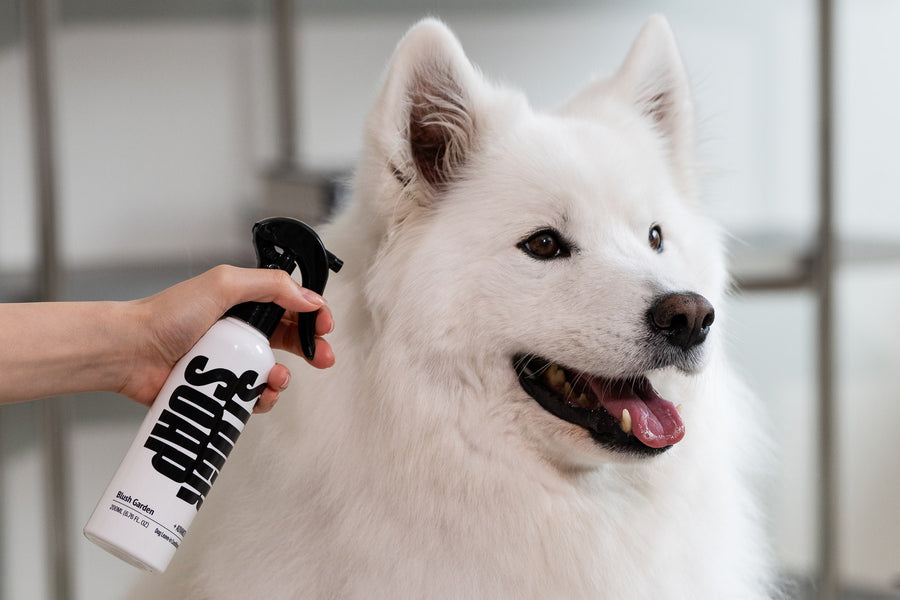
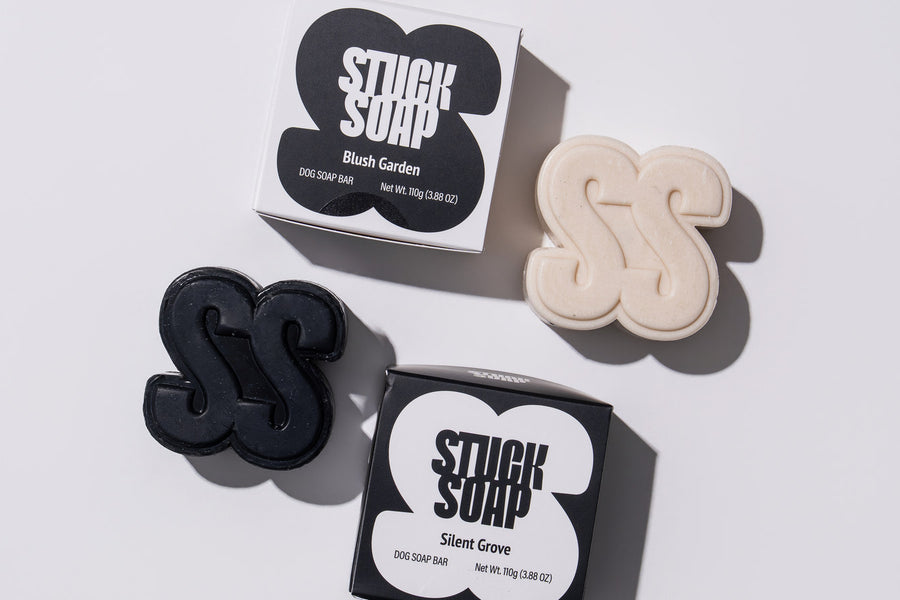
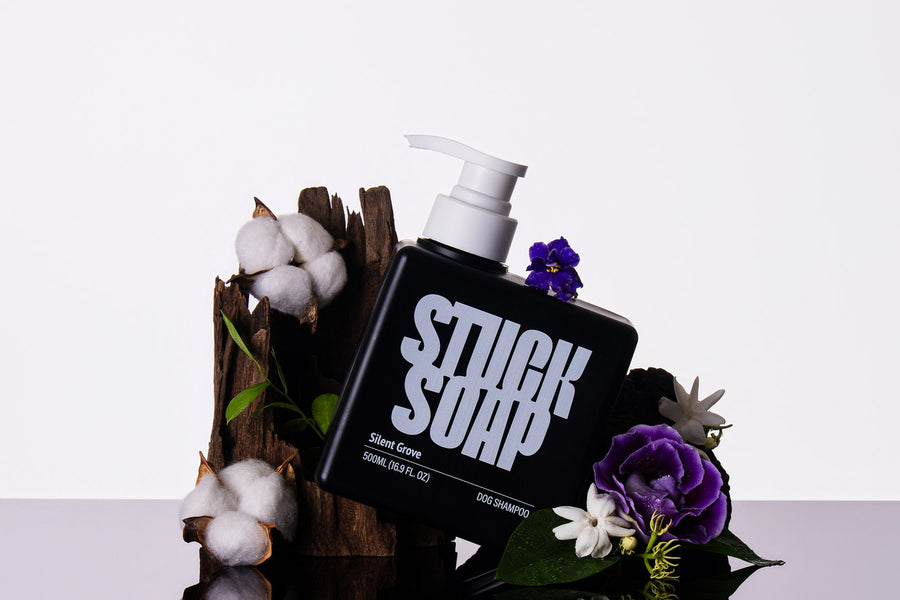
Being direct about this: STUCK SOAP does not make a finishing spray or cologne. Our range is the 500ml liquid shampoo and the zero-waste shampoo bar, in Silent Grove and Blush Garden. If you want that specific lingering salon fragrance, you are shopping in a different category, and that is fine. Ask your groomer what they use and whether they will sell you some.
Worth saying plainly: a truly clean, fully dried coat does not smell like anything much. Neutral is the real target. Fragrance sits on top of that, and how long any scent holds depends heavily on the three variables above, which is the subject of why some dog shampoo scents last longer than others.
When the Smell Is a Vet Question, Not a Bathing Question
No amount of technique fixes an odor that has a medical cause, and treating one with more baths delays the thing that would actually help. A strong smell that survives a properly executed bath is a reason to book an exam, not a reason to buy shampoo.
Pay attention to character and location. Yeasty, sour, sweet, or frankly foul odors, especially localized to ears, paws, skin folds, the mouth, or the rear end, are signals worth a professional look. The Merck Veterinary Manual's owner-facing material on canine skin conditions is a reasonable starting point for understanding what a veterinarian will be checking. STUCK SOAP is a non-medicated cosmetic grooming product. It cleans and conditions, and it is not a treatment for any condition.
The At-Home Protocol
Why your dog smells so good after the groomer, translated into a home routine
- Brush before water. Mats and loose undercoat block shampoo and trap water. Five minutes here saves twenty later.
- Mix your dilution. One dose of shampoo into a squeeze bottle or jug of warm water. Shake. This is your working solution for both passes.
- Soak the coat properly. Water to the skin, not just the topcoat. Dense coats repel water at first and need a minute of persistence.
- Pass one. Apply, work through quickly, rinse. This pass is short and its only job is removing the surface layer.
- Pass two. Apply again, work it in to the skin, and let it dwell while you move front to back. This is the cleaning pass.
- Rinse longer than feels necessary. Then check armpits, belly, chest, and the base of the tail, which are the spots that hide residue.
- Towel twice. First towel absorbs the bulk, second one gets what the first left behind.
- Dry to the skin. Airflow, section by section, lifting the coat. Confirm by touch at the skin before you call it done.
- Optional finish. If you want the salon note, a light finishing spray from a dedicated product goes on now, on a dry coat.
For a printable version of the pre-bath and post-bath checks, see what to check when bathing your dog. If the logistics are the obstacle rather than the technique, bathing a dog without wrecking your bathroom covers the setup.
Frequently Asked Questions
Why does my dog smell so good after the groomer?
Four things stack up. Groomers dilute shampoo in water so it spreads and rinses clean, wash twice so the second pass reaches skin, dry the coat completely with a high velocity dryer, and finish with a light scent product. Method matters more than the bottle. None of the four requires salon equipment to approximate at home.
Should I dilute dog shampoo before bathing?
Yes, for most concentrated shampoos. Mixing a small amount of shampoo into a bottle or jug of warm water helps it spread evenly across a dense coat, reach the skin, and rinse out fully. Neat product tends to sit in one spot, lather poorly at the skin, and leave residue behind.
Do groomers wash dogs twice?
Commonly, yes. The first pass lifts surface oil, dust, and loose debris so that shampoo can actually contact skin on the second pass. That second wash is where cleaning happens. On a lightly soiled short coat one thorough pass may be enough, but two is the standard for a reason.
Why does my dog smell again a day after a bath?
Usually because the coat never dried completely. Warm damp fur close to the skin is where odor develops, and a thick undercoat can hold moisture for hours after the surface feels dry. Incomplete rinsing is the second common cause, since leftover residue attracts dirt and dulls the coat.
Is the groomer smell coming from the shampoo or something else?
Often both. Shampoo contributes scent during the wash, but much of the lingering fragrance after a salon visit comes from a finishing spray or cologne applied at the end, which is a separate product from shampoo. A genuinely clean, fully dried coat also simply smells neutral rather than doggy.
When should odor send me to the veterinarian instead of the tub?
Any strong smell that survives a proper bath deserves a professional look. Yeasty, sour, sweet, or foul odors coming from skin, ears, mouth, or rear end can point to an underlying health issue. Shampoo is cosmetic care, not treatment, so book an exam rather than rebathing repeatedly.
Sources
- American Kennel Club, Expert Advice: Grooming. akc.org/expert-advice/grooming/
- Merck Veterinary Manual, Dog Owners: Skin Disorders of Dogs. merckvetmanual.com/dog-owners/skin-disorders-of-dogs
- American Veterinary Medical Association, Resources for Pet Owners. avma.org/resources-tools/pet-owners
Bathe Like a Groomer
Three of the four variables are free. If you want the fourth part of the setup, a pH-balanced, high-concentrate formula built to be diluted, one pump at a time, see the Liquid Shampoo and zero-waste Shampoo Bar in Silent Grove and Blush Garden at stucksoap.com.